
Material choice can make or break a CNC machining project. Stainless steel stands out because it’s strong, tough, and resists rust. Two of the most common types for CNC work are 303 and 304.
Understanding the difference between 303 vs 304 stainless steel CNC machining saves time and reduces waste. This post breaks down how each alloy behaves during machining. It explains what sets them apart. You will learn when to choose one over the other. If you want smoother cuts and less tool wear, knowing the right stainless steel is key.

- Chemical Composition and Key Properties of 303 and 304 Stainless Steel
- Machinability: 303 vs 304 Stainless Steel in CNC Applications
- Corrosion Resistance and Durability: 303 vs 304 Stainless Steel
- Cost, Availability, and Application Suitability in CNC Machining
- Wisense 303 304 Stainless Steel Parts Machining Services
- Conclusion
Chemical Composition and Key Properties of 303 and 304 Stainless Steel
Knowing what goes into 303 and 304 stainless steel unlocks the real difference between them, especially for CNC machining. The tweaks in their chemistry change how they perform in a shop. They also affect how they handle stress, wear, and corrosion. Below, let’s break down what’s inside each grade and how that plays a role in real-world machining.
Chemical Makeup Explained
Most people see stainless steel as just “rust-proof steel.” But when comparing 303 vs 304 stainless steel for CNC machining, the details make all the difference.
- 303 Stainless Steel:
- Iron: Balances the structure, like all steels
- Chromium (17-19%): Main rust-fighting element
- Nickel (8-10%): Adds ductility and toughness
- Manganese (max 2%)
- Silicon (max 1%)
- Sulfur (0.15-0.35%): The secret ingredient for better machinability
- Phosphorus (max 0.2%)
- 304 Stainless Steel:
- Iron: Same backbone as 303
- Chromium (18-20%)
- Nickel (8-10.5%)
- Manganese (max 2%)
- Silicon (max 1%)
- Sulfur (max 0.03%) (much lower than 303)
- Phosphorus (max 0.045%)
The main chemical difference is sulfur. 303 gets extra sulfur on purpose, while 304 stays pure for toughness and corrosion resistance.
Impact on Machinability
When running CNC machines, every element counts. In 303, the higher sulfur content forms small, hard particles in the steel. These act like tiny ball bearings, breaking up chips and keeping them from sticking to the tool. The result? Easier, cleaner cuts and less tool wear.
Key machinability points:
- 303 is famous for running fast and cool in CNC machines.
- It rarely clogs up cutters and reduces downtime.
- 304 doesn’t machine as smoothly. The low sulfur means chips can be long and stringy, often tangling with tools and slowing workflow.
Machinists choose 303 stainless when they want smoother, faster cuts for high-volume work. If you want to slash tool replacement costs, 303 is the way to go for CNC.
Corrosion Resistance and Strength
Chromium protects both steels from rust, but that extra sulfur in 303 comes with a tradeoff. In 303, the sulfur can create weak points where corrosion can start.
Compare the two:
- 304 stainless steel is more resistant to corrosion than 303.
- 303’s added sulfur lowers its score in tough environments, especially near saltwater or harsh chemicals.
- For projects where appearance and clean welds matter, 304 is usually picked.
In everyday use:
- 304 is chosen for sinks, grills, food tools, and anything exposed to the outdoors.
- 303 excels in fittings, connectors, and parts that demand quick machining over top-notch corrosion resistance.
Mechanical Properties Side-by-Side
Let’s sum up the basic mechanical traits you’ll see on a spec sheet or in real parts during CNC machining:
- Hardness: Similar for both, but 304 can handle a little more stress before deforming.
- Ductility: 304 bends without cracking, so it’s favored for complex shapes and deep draws.
- Toughness: 304 wins in low temperatures and high-impact situations.
- Weldability: 304 welds without much trouble. 303 can crack near welds because of sulfur.
Here’s a quick list of what stands out when using 303 vs 304 stainless steel for CNC machining:
- Choose 303 for:
- High-speed production
- Parts with lots of turning or milling
- Reduced tool wear
- Choose 304 for:
- Parts needing maximum corrosion resistance
- Designs that will be welded or formed
- Food, medical, or outdoor use
Understanding the real differences at the chemical and property level is crucial. This knowledge helps you select the right stainless steel for your next CNC project. Speed, quality, and durability all start here.
Machinability: 303 vs 304 Stainless Steel in CNC Applications
Machinability is about how easy or tough a material is to cut, shape, and finish using CNC tools. It covers tool life, chip control, speed, finish quality, and how much attention you have to give the process. When you compare 303 vs 304 stainless steel CNC machining, machinability becomes a deciding factor for speed, cost, and consistency. Both alloys share some similarities, but their performance during machining can make or break a CNC job.
Tool Selection and Performance for Each Alloy
The right tool makes all the difference. In CNC machining, tool choice often decides uptime, scrap rate, and the quality of each part.
- 303 Stainless Steel:
Thanks to added sulfur, 303 is known as the “free-machining” grade. Sulfur acts as a built-in chip breaker, which means chips don’t get long or stringy. This keeps them away from the cutting zone and helps the tool last longer.- Tool Type: Standard carbide or high-speed steel (HSS) tools both work well. For long runs or tighter tolerances, carbide cutters offer even longer life and better resistance to built-up edge.
- Tool Life: You’ll get up to 40% longer tool life machining 303 than 304, with less risk of built-up edge. Expect fewer stops to replace or sharpen tools.
- Speeds & Feeds: 303 allows higher cutting speeds and feed rates compared to 304, reducing cycle times.
- Cooling: Moderate coolant provides enough chip clearing—nothing fancy needed. Standard flood coolant keeps things running smoothly.
- 304 Stainless Steel: 304 is tougher and more ductile but much less forgiving for machinists. Low sulfur means chips can get long, often wrapping around tools and interrupting production. This grade wears out tools faster, especially at higher speeds.
- Tool Type: Always use sharp carbide tools for 304. Coatings like TiAlN or TiCN help reduce heat and tool wear. Uncoated HSS struggles unless you limit speeds.
- Tool Life: Expect tool wear to be 30–50% higher than with 303. Sharpen tools more often to keep up with the dulling effect of tough, gummy chips.
- Speeds & Feeds: Reduce speeds and feeds to control heat and chip buildup. Aggressive machining quickly eats up carbide edges.
- Cooling: Use plenty of coolant with the right pressure to flush chips. Heat buildup increases risk of work hardening, adding to tool stress.
Summary Table: Tool Selection and Performance
| Alloy | Tool Type | Tool Life | Chip Control | Cooling Needs |
|---|---|---|---|---|
| 303 | Carbide/HSS (uncoated) | Long | Easy (short) | Standard coolant |
| 304 | Carbide (coated best) | Shorter | Tough (long) | Heavy/focused coolant |
Surface Finish and Tolerances Achievable
Surface finish and tolerances shape the final look and precision of your CNC parts. For 303 vs 304 stainless steel CNC machining, machinability affects both.
- 303 Stainless Steel: 303 machines to a fine, glossy finish with less effort. Improved chip control means fewer tool marks or scratches. It’s the go-to choice when you want parts to come off the machine looking clean and sharp.
- Surface Finish: Achievable Ra surface finishes as fine as 16–32 µin are common right off the CNC. Minimal deburring or polishing needed.
- Tolerances: Consistent chip size and less built-up edge mean you can hit tight tolerances, often holding ±0.001″ (0.025 mm) with standard CNC setups.
- Dimensional Accuracy: Minimal warping, less thermal load during cutting, so dimensions stay true, especially on small or detailed features.
- 304 Stainless Steel: 304 tends to smear, with chips sticking to cutters and dragging across the workpiece. This leaves behind micro-gouges and that slightly rough, streaky look, even with careful setup.
- Surface Finish: Typical Ra ranges from 32–63 µin or rougher unless speeds, feeds, and tooling are dialed in perfectly. Often needs post-processing for mirrors or tight specs.
- Tolerances: Tool wear and chip re-cutting can throw off dimensions, making it harder to hold ±0.001″. Extra spring cuts or finishing passes help, but add time.
- Dimensional Accuracy: Heat buildup and work hardening may cause slight shifts during machining, especially on thin walls or deep pockets.
In summary, 303 is faster and easier to machine. It provides better surfaces. It also offers more reliable tolerances at high production speeds. 304 delivers greater corrosion resistance, but with more effort for the machinist, and often at a higher tool cost.
For projects where appearance, quick turnaround, and cost control matter, 303 shines. If corrosion resistance is the top priority, you’ll need to plan for slower machines. You will also require sharper tools and a bit more post-processing with 304. The right choice comes down to what matters most in your CNC work.
Corrosion Resistance and Durability: 303 vs 304 Stainless Steel
Corrosion resistance is often a dealbreaker for CNC machined parts, especially if parts face wet, salty, or aggressive environments. In the 303 vs 304 stainless steel CNC machining debate, it’s crucial to know which alloy will last longer. Understanding their resistance to pitting, staining, or rusting can help you avoid part failures. It also helps prevent costly do-overs. Here’s a closer look at how each stands up to various exposures and what this means for your finished components.
Performance in Everyday and Industrial Environments
Let’s break down how each grade fights off rust and holds up in normal day-to-day conditions, workshops, and factory floors.
- 303 Stainless Steel:
- Better machinability comes at a cost. The sulfur added to make cutting easier also opens the door to corrosion in spots, especially after machining.
- 303 works well for indoor parts and dry environments. Its corrosion resistance matches or slightly exceeds many standard steels but isn’t bulletproof.
- 304 Stainless Steel:
- No shortcut here—304 was made for battling rust. The balanced mix of chromium and nickel holds up against spills, splashes, and humid air.
- For factory parts exposed to coolants, food, or mild cleaning chemicals, 304 holds its shine and won’t pit easily.
Food-Grade Applications for CNC Machined Parts
Choosing between 303 vs 304 stainless steel CNC machining for food contact isn’t a small thing. The right pick keeps products safe and parts easy to clean.
- 304 Best for Food-Safe Parts:
- 304 meets FDA and most hygienic standards. It resists acids in fruits, meats, and cleaning chemicals, so it doesn’t leach or stain.
- CNC machined 304 finds its way into everything from kitchen equipment to dairy and beverage fittings.
- 303 Can Be Used—With Caution:
- 303’s extra sulfur creates more small pits after machining. These crevices can hold bacteria. This makes it less safe where strict hygiene counts.
- Okay for fasteners or support hardware in food settings, but not for direct food contact or wet processing areas.
Marine and Outdoor Exposure
When parts might face rain, salt, or spray, corrosion resistance is the biggest cause for concern.
- 304 Handles Corrosive Environments:
- Handles sea air, humidity, and rain much better. Chromium in 304 forms a tough film that repairs itself against small cuts or scratches.
- Great for outdoor enclosures, boat hardware, and parts that see saltwater or coastal air.
- 303 Falls Short on the Coast:
- In marine settings, 303 starts to pit and discolor over time, sometimes weeks faster than 304.
- Light use outdoors is fine but don’t count on it in salty or highly humid places.
Durability After Machining
Both grades stay strong after machining, but corrosion shows up in surprising ways over time. After CNC work, the edges and tiny surface scratches left behind can collect salt, cleaning chemicals, or water.
- Post-Machining Reality:
- 303’s sulfur spots show up as tiny corrosion pits after months in tough environments. This weakens parts at the surface level.
- 304 resists these attacks. Even after a tight CNC job, 304’s smoother, denser surface blocks out most moisture and dirt.
Post-Machining Treatments and Care
You can improve a part’s corrosion resistance after CNC by finishing the surface. Here’s what usually works:
- Common Post-CNC Treatments:
- Passivation: A gentle acid bath that removes iron from the surface and boosts rust resistance. Works better on 304, giving it an even stronger shield.
- Polishing or Tumbling: Smooths out nicks and leaves fewer places for water or grime to hide. After this, both 303 and 304 look cleaner, but 304 wins again for staying shiny longer.
- Coatings: For the rare job where even 304 isn’t enough, a thin coating or paint layer may be added. However, this involves extra work and cost.
Quick Comparison Table
Here’s a side-by-side look at how 303 and 304 stack up for corrosion resistance in CNC machined parts:
| Property | 303 Stainless Steel | 304 Stainless Steel |
|---|---|---|
| Rust Resistance | Good (indoors/dry) | Excellent (most environments) |
| Food-Grade Acceptance | Conditional (hardware only) | Yes (direct contact safe) |
| Marine Use | Not recommended | Highly suitable |
| Holds Up After Machining | Prone to surface staining | Maintains smooth, clean finish |
| Responds to Passivation | Minor boost | Major boost |
With 303 vs 304 stainless steel CNC machining, you need to match the material to how it cuts. Consider where the part will be used. Also, decide how much effort you want to spend on maintenance. Always weigh immediate gains during machining against the long-term staying power your project deserves.
Cost, Availability, and Application Suitability in CNC Machining
When choosing between 303 vs 304 stainless steel CNC machining, remember to consider cost. Think about supply. Also, evaluate the best jobs suited for each grade. These three factors shape most decisions in the shop, especially when deadlines, budgets, and part function drive your project. Here’s how each steel compares where it matters most. It affects your balance sheet, your supplier’s inventory, and real-world CNC use.
Price Differences and Budget Planning
Price always matters, especially with stainless steel. While both 303 and 304 are considered affordable, there are clear differences that show up at scale.
- 303 Stainless Steel:
- Slightly more expensive than 304 by the pound. The added sulfur and processing steps for machinability push the price up by about 10–15% on average.
- Because 303 machines faster, jobs often cost less overall. You spend less on tool wear, labor, and machine time—turnaround is quicker, and scrap rates drop.
- 304 Stainless Steel:
- Generally cheaper per pound in most markets. Wide use keeps it competitive in price.
- Slower CNC runs and higher tool wear lead to increased costs. Jobs can cost more in total labor and production overhead. This increase can exceed the initial material savings.
Quick Tip: For large-batch CNC projects where volume matters, consider using 303. Your total cost per finished part with 303 often ends up similar to 304. It may even be lower.
Availability Around the Globe
Both grades are widely available, but supply and consistency can impact CNC job planning.
- 303 Stainless Steel:
- Readily available in most industrial regions and stocked by major distributors.
- May have fewer size and shape options compared to 304. However, round bar, hex, and some plate sizes are easy to source.
- Specialty orders or custom shapes can sometimes add lead time.
- 304 Stainless Steel:
- One of the world’s most common stainless steels—think of it as the “default” alloy for many suppliers.
- Found in a huge range of sizes, shapes, and finishes (sheet, bar, tube, etc.).
- Easier to source in custom dimensions or for large runs, with near-universal availability.
Summary Table: Cost and Supply Comparison
| Property | 303 Stainless Steel | 304 Stainless Steel |
|---|---|---|
| Cost (per pound) | Moderate-high | Moderate |
| Machining Expenses | Lower (tools, labor, time) | Higher (slower, more tool cost) |
| Availability | Broad, some size limits | Excellent, all forms |
Matching Material to Application
Choosing 303 or 304 isn’t just about what’s cheaper or easier to find. Matching grade to job saves money, time, and worry. Each steel wins for certain types of CNC projects:
- 303 Stainless Steel Suits:
- Fasteners, screws, and bolts: High-volume turned parts where quick cycle times matter.
- Fittings and connectors: Complex or threaded shapes that need crisp surfaces.
- Precision parts: Gears, bushings, and shop tools where close tolerances and nice finishes matter.
- 304 Stainless Steel Shines In:
- Food and beverage components: Valves, pumps, trays—any part with direct food contact.
- Structurals and assemblies: Brackets, frames, or housings that see outdoor, marine, or chemical exposure.
- Medical and cleanroom applications: Parts that must resist corrosion and repeated washdowns.
Some applications accept either alloy, depending on the environment and budget. Still, picking the right material avoids tradeoffs, like premature failure or surprise maintenance calls.
Choosing Made Simple:
- Need quick machining and low overhead? Pick 303.
- Need durability and all-weather protection? Go with 304.
Practical Recommendations from CNC Machining Case Studies
Looking at real-world shops, the right material comes down to matching needs with the steel’s strengths. Here’s how the choice plays out on the floor:
- Case Study 1: A manufacturer making high-precision threaded inserts selected 303. This move reduced tool changes by 30% per shift and cut job completion time by a quarter. Scrap dropped and parts left the machine with a flawless finish, ready for plating.
- Case Study 2: An outdoor equipment company went with 304 for welded brackets exposed to rain and de-icing chemicals. While cycle times ran 10% slower, the parts survived three winters without a single rust complaint.
- Case Study 3: A food processing plant needed a quick batch of custom valve stems. The machinist used 304 to pass hygiene audits, knowing cleanup and safety trumped quick feeds and speeds.
In each case, picking 303 or 304 depended on the real-world situation. Speed was crucial for mass production. Reliability mattered where hygiene or outdoor exposure was important.
Key Takeaway:
When considering 303 vs 304 stainless steel for CNC machining, evaluate the numbers. Verify your end-use requirements. Communicate with your supplier. The “better” grade is the one that fits your budget. It must withstand your job’s site conditions. It also needs to match your machining goals—without surprises down the line.
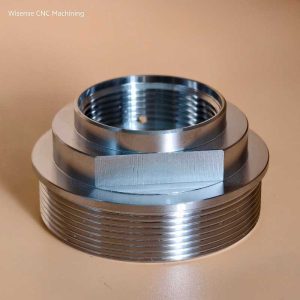
Wisense 303 304 Stainless Steel Parts Machining Services
Choosing the right partner for CNC machining can make all the difference in both quality and turnaround. Wisense stands out by delivering consistent, precise results with both 303 and 304 stainless steel parts. Here’s what makes our approach to 303 vs 304 stainless steel CNC machining worth paying attention to.
Specialized Expertise in Material Selection
Wisense understands the unique demands of each project. Our team often works with engineers and buyers to pick the best stainless grade for your exact needs.
- Material advice: If you’re wrestling with the 303 vs 304 stainless steel CNC machining choice, Wisense provides a detailed breakdown. This is based on the function of your part. Consider whether it will be used indoors or outdoors. Think about whether it will be exposed to food, under pressure, or in a rough environment.
- Sample runs: For tricky parts, we’ll often give test samples in both alloys. This helps you compare finish, speed, and cost before making a full production run.
Advanced CNC Equipment for Tight Tolerances
Wisense invests in CNC mills and lathes built to handle both grades. This matters because 303 machines quickly with less wear on cutters, while 304 needs sharper tools and careful chip control.
- Flexible setup: They swap in coated carbide tools for each batch. We fine-tune settings to make quick work of 303. Precision is dialed in for 304.
- High repeatability: Machines lock in tolerances as close as ±0.0005″, crucial for precision aerospace, medical, and electronics parts.
Full Range of Secondary Processing
Your parts often need more than just machining. Wisense offers extra finishing steps that pair well with both 303 and 304 stainless CNC jobs.
- Deburring and polishing: Fast turnaround for surface finishes as low as 16 Ra micro-inch on 303. We take extra care on 304 for smooth, burr-free edges.
- Passivation: They boost corrosion resistance on 304 with proper passivation. For 303, we apply compatible treatments to maximize service life, especially for indoor hardware.
- Thread rolling and tapping: Both alloys can be tapped and threaded on-site. However, Wisense’s experience ensures fewer stripped threads. This results in a better hold and less rework.
Strong Support for Custom and Large Runs
No two clients need the same run size or design complexity. Wisense tackles both quick prototypes and big production jobs.
- Small batch support: If you need just a handful of custom 303 or 304 stainless steel parts, we offer rapid prototyping. We also provide advice on material pros and cons.
- High-volume runs: Automated loading and in-process inspection help keep parts consistent, batch after batch. Faster cycle times with 303 offset higher material costs on large orders.
Commitment to Quality and Delivery
A quality CNC partner pays attention to every detail, from quoting to shipping. Wisense tracks every order for consistent results.
- Material traceability: Every 303 and 304 part comes with records showing source and heat lot. This matters for industries with strict quality rules like automotive, aerospace, and food processing.
- Inspection reports: Tolerances, surface finish, and dimensions checked and reported. You get peace of mind—no guesswork or hidden issues.
Why Machinists and Engineers Choose Wisense
Here’s why Wisense keeps showing up in the conversation around 303 vs 304 stainless steel CNC machining:
- Clear communication: No surprises—quotes include material, machining, and any extra processing.
- Consistent results: Repeat orders stay within tiny tolerances, no drifting on surface quality or fit.
- Flexible scaling: Whether you need a last-minute prototype or full production run, we adjust easily.
Choosing Wisense for your 303 or 304 stainless CNC needs means fewer headaches. You get more parts that meet spec. They are delivered on time, every time.
Conclusion
The choice between 303 vs 304 stainless steel CNC machining depends on what matters most for your parts. Consider machinability, durability, or specific use. Go with 303 when you want faster runs, easier chip control, or lower tool wear. Pick 304 if corrosion resistance, weldability, or food-safe parts are top priorities.
Both grades are reliable and stocked by most suppliers. Make your decision based on where your parts will end up and the performance you expect. There’s no single right answer—each alloy brings its own edge to CNC jobs.
Thanks for reading and putting your trust in this guide. If you’re considering the 303 vs 304 stainless steel CNC machining decision for your next project, please share your experience. You can also ask your key questions below. Your feedback makes these resources better for everyone.
