
CNC machining is a go-to method for creating precise, high-quality parts, and stainless steel is one of the most frequently used materials in this process. Why? It’s durable, corrosion-resistant, and perfect for projects demanding strength and versatility. From medical devices to aerospace components, stainless steel offers the kind of reliability manufacturers need. This post will cover what makes stainless steel so ideal for CNC machining, the challenges it presents, and how to ensure the best results.

Key Properties of Stainless Steel
Stainless steel stands out as a material of choice in CNC machining, thanks to its exceptional and varied properties. From its resistance to harsh environments to its eco-friendly benefits, stainless steel offers a combination of features that make it indispensable across industries. Let’s take a closer look at the key properties that make stainless steel such a trusted option.
Corrosion Resistance of Stainless Steel
One of stainless steel’s most well-known traits is its ability to resist rust and corrosion. This happens because of the thin yet powerful chromium oxide layer on its surface, which protects it from moisture, air, and chemicals. For industries like aerospace, marine, and medical, where exposure to harsh conditions is common, this property is invaluable.
Think about applications where equipment is regularly exposed to water or chemicals, such as surgical tools or food processing machines. Unlike regular steel, stainless steel doesn’t rust or degrade, ensuring reliable performance over time. In CNC machining, this corrosion resistance means fewer concerns about replacing parts prematurely, making it a cost-efficient option.
High Strength and Durability
Stainless steel is exceptionally strong and highly durable, offering long-lasting performance even under stress. This strength, however, can make the machining process more demanding. It requires precise tools and settings to cut and shape the material effectively.
Still, its strength-to-weight ratio makes it perfect for critical components in construction, automotive, and machinery. When CNC-machined, stainless steel can handle physical stress without deforming or cracking, ensuring safety and reliability. Whether you’re manufacturing engine parts or industrial fasteners, its toughness is hard to beat.
Heat and Chemical Resistance
When exposed to extreme temperatures or harsh chemicals, stainless steel doesn’t falter. This makes it a go-to material for environments like power plants, chemical labs, and kitchens where high heat or exposure to corrosive substances is unavoidable.
For CNC machining, heat resistance is particularly important. Cutting tools generate high temperatures, and stainless steel’s ability to maintain its integrity under heat ensures effective machining without compromising the quality of the final product. It’s also why it’s heavily used in manufacturing exhaust systems, heat exchangers, and even cookware.
Eco-Friendly and Recyclable Nature
Sustainability is becoming increasingly important, and stainless steel fits perfectly into greener manufacturing practices. It is 100% recyclable, meaning old parts and scrap steel can be melted down and turned into new materials without losing quality. This reduces waste and supports circular manufacturing practices.
Additionally, stainless steel is long-lasting, which means fewer resources are needed for replacements. Choosing materials like this not only reduces the environmental footprint but can also appeal to customers looking for sustainable solutions. If your CNC machining projects prioritize environmental responsibility, stainless steel checks all the boxes.
Stainless steel’s mix of durability, resistance, and sustainability makes it a standout material for CNC machining. Keeping these properties in mind ensures you can align your manufacturing goals with both quality and performance expectations.
Challenges in CNC Machining Stainless Steel
CNC machining stainless steel is not without its challenges. While this material boasts outstanding strength, durability, and corrosion resistance, its unique properties can also create hurdles during the machining process. From increased tool wear to managing heat and work hardening, these obstacles require careful handling to deliver high-quality parts efficiently. Here’s a breakdown of the common challenges and practical strategies machinists use to overcome them.
Tool Wear and Tear
Stainless steel’s hardness and strength are double-edged swords. While they enhance the durability of finished components, they also put significant stress on cutting tools, leading to rapid wear and tear. Tool degradation can cause poor cutting performance, increased downtime, and higher costs for replacements.
To combat this:
- Use carbide tools: These are harder and more heat-resistant than standard steel tools, lasting longer during the machining process.
- Apply coatings: Coatings like titanium nitride (TiN) or aluminum titanium nitride (AlTiN) reduce friction and heat, extending tool life.
- Regular maintenance and replacements: Preventative tool changes ensure consistent performance without waiting for tools to fail completely.
By choosing the right tools and monitoring their condition, operators can stay ahead of excessive wear and keep production on track.
Heat Generation During Cutting
Stainless steel has low thermal conductivity, meaning it doesn’t dissipate heat well during cutting. This leads to heat buildup at the cutting zone, which can damage tools, degrade surface finishes, and even alter the material’s properties.
Solutions include:
- Cutting fluids: Using a high-quality cutting fluid reduces heat by providing lubrication and cooling. Flood cooling is particularly effective.
- Lower cutting speeds: Slowing down cutting speeds minimizes friction, decreasing heat generation.
- Sharp tools: Dull tools generate more heat; keeping tools sharp eliminates this issue.
Managing heat is critical not only for protecting tools but also for maintaining the structural integrity of the stainless steel part.
Machining Speeds and Feeds
Finding the right balance in speeds and feeds is essential when working with stainless steel. Too high, and you’ll generate excessive heat and wear out tools. Too low, and it can lead to chatter, poor chip evacuation, and slower production.
Key factors to consider:
- Reduce surface speed: Aim for slower spindle speeds compared to softer metals like aluminum.
- Increase feed rate: Unlike many materials, stainless steel benefits from higher feed rates to overcome work hardening and improve chip formation.
- Test and fine-tune: Run trials on your specific grade of stainless steel to optimize speeds and feeds for the best results.
Getting this balance right may take some time, but it’s crucial for extending tool life, improving part quality, and maintaining efficiency.
Work Hardening Tendencies
One of the biggest challenges of machining stainless steel is its tendency to work harden. As the material is cut or deformed, its surface becomes harder and tougher, making it more difficult to machine further. If not handled correctly, work hardening can cause tool failure and compromise dimensional accuracy.
To address this:
- Use aggressive cuts: Shallow passes can cause work hardening, so aim for deeper, consistent cuts that minimize contact time.
- Sharp tools only: Dull tools generate friction and heat, increasing the risk of work hardening.
- Avoid letting tools dwell: Continuously moving the tool keeps it from sitting too long on the material, which can lead to hardening.
Work hardening is a behavior unique to stainless steel, but with precise planning and the right practices, it can be managed effectively.
By understanding these challenges and implementing proven strategies, machinists can significantly improve their results when working with stainless steel. This material may require extra care, but the rewards of creating durable, high-performing parts make it all worthwhile.
Best Practices for CNC Machining Stainless Steel
Machining stainless steel can be challenging, but with the right techniques and tools, you can achieve exceptional results. Wisense, as a professional CNC machining stainless steel expert from China, has handled a large number of stainless steel machining cases in more than ten years of machining, trained dozens of experienced processors, summarized a lot of machining experience, and provided large-scale stainless steel machining services for several major brands. From minimizing tool wear to maintaining surface quality, following best practices ensures both efficiency and precision. Below, we’ll explore key strategies to optimize CNC machining for stainless steel.
Using High-Performance Cutting Tools
The tools you choose can make or break your machining process—literally. Stainless steel is tough and abrasive, so opting for cutting tools specifically designed for this material is critical. Carbide-tipped tools are highly recommended. Why? They’re not just durable; they can withstand the heat and wear that stainless steel generates during machining.
Here are some advantages of carbide tools:
- Hardness: Carbide’s superior hardness reduces wear, allowing tools to last significantly longer.
- Heat resistance: Higher heat tolerance ensures performance even during prolonged machining sessions.
- Edge retention: Precise cuts without frequent sharpening ensure consistent quality.
If extra heat management or abrasion resistance is needed, choose tools with ceramic coatings or specialty grades designed for stainless steel. Always inspect tools regularly for wear—sharp tools reduce machining strain and improve overall productivity.
Optimizing Coolants and Lubricants
Stainless steel doesn’t conduct heat well, which can be both a blessing and a curse during machining. Without the right coolant or lubricant, heat builds up quickly, leading to tool damage and poor surface finishes. This is where high-performance cutting fluids come into play.
Effective coolants:
- Minimize heat: By keeping the cutting zone cool, they prevent thermal damage to the tool and workpiece.
- Reduce friction: Lubrication lowers resistance, helping tools cut smoothly and efficiently.
- Flush chips: Proper fluid flow removes chips from the cutting area, reducing risks of scratches and tool breakage.
Flood cooling is often the best choice for stainless steel since it fully immerses the cutting zone in coolant. For even better results, consider hybrid coolants with both cooling and lubricating properties for enhanced control.
Maintaining Optimal Machine Settings
Fine-tuning your CNC settings is essential for machining stainless steel. Incorrect speeds, feeds, or depths can lead to excessive tool wear, poor finishes, and even tool failure. Let’s break down the key parameters to focus on:
- Spindle speed: Stainless steel requires slower speeds compared to softer metals. This reduces heat and prevents work hardening. As a general rule of thumb, aim for lower RPMs.
- Feed rate: Surprisingly, higher feed rates can improve chip formation and reduce work hardening. Aggressive, consistent feeding is better for stainless steel than cautious, slow passes.
- Depth of cut: Avoid shallow passes; they increase friction and risk hardening the material. Instead, aim for deeper, steady cuts that clear material effectively.
Experimenting with your specific machine and material grade is important. Run small test cuts before large production runs to identify the best combination of settings.
Employing Advanced Machining Techniques
Technology and innovation have introduced new methods that simplify machining even tough materials like stainless steel. Leveraging these approaches can save time, extend tool life, and improve results.
Consider these advanced techniques:
- High-speed machining: By combining optimized speeds and lighter cuts, high-speed machining generates less heat and produces smoother finishes. It’s ideal for precision parts where dimensional accuracy is crucial.
- Cryogenic cooling: For extreme cases, cryogenic cooling using liquid nitrogen can substantially reduce heat. This technique keeps both the tool and material colder, extending tool life and improving surface integrity.
- Vibration-dampening setups: Stainless steel machining often generates chatter due to its rigidity. Special tooling setups or vibration-dampening technologies stabilize the cutting process.
While not always necessary, these methods can be game-changers for high-volume jobs, complex geometries, or tight tolerance requirements. Explore what works best based on your production needs and equipment capabilities.
By applying these best practices and continually optimizing your process, you can transform the challenges of stainless steel machining into opportunities for superior craftsmanship.
Applications of CNC Machined Stainless Steel Components
Stainless steel components produced through CNC machining play a critical role in various industries. Known for their combination of strength, corrosion resistance, and precision, these parts are tailored for demanding applications where performance and reliability are vital. Below, we’ll explore how CNC machined stainless steel is used in key industries that rely heavily on its unique properties.
Aerospace Industry
The aerospace industry demands components that meet the highest standards of accuracy and durability. Parts must withstand extreme conditions such as high altitudes, fluctuating temperatures, and constant vibration—all while maintaining performance and safety. CNC machined stainless steel components are a natural fit for these requirements.
In aviation, stainless steel is used to produce critical parts like turbine blades, fasteners, and engine housings. These parts need to endure intense pressure and heat without deforming or failing. Compared to other materials, stainless steel offers not only exceptional strength but also the corrosion resistance crucial in combating moisture and harsh atmospheric conditions.
Precision is everything in aerospace. Even minor deviations can result in massive system failures. CNC machining ensures every component fits exact specifications, providing the reliability airplanes and spacecraft must have. From structural supports to exhaust systems, stainless steel’s combination of precision and durability helps the aerospace industry stay airborne—literally.
Medical Equipment
Medical equipment must meet strict cleanliness and safety standards—this is where stainless steel shines. Its natural resistance to corrosion, ease of sterilization, and biocompatibility make it invaluable for healthcare applications. CNC machined stainless steel parts are found in surgical tools, implants, and diagnostic devices, where precision could mean the difference between life and death.
Stainless steel’s smooth, non-porous surface prevents bacteria and pathogens from clinging, making it ideal for sterile environments. Additionally, the material handles repeat sterilization processes, such as autoclaving, without degrading. This durability ensures long-lasting performance, reducing the need for frequent replacements.
Think about surgical instruments like scalpels or retractors. They need to retain their sharpness and integrity through endless use. CNC machining ensures these tools are crafted with absolute accuracy, producing functional, reliable, and safe equipment every time. Whether in operating rooms or laboratories, stainless steel plays a crucial role in advancing medical care.
Food and Beverage Processing
When it comes to food safety, stainless steel ticks all the boxes. It’s non-toxic, easy to clean, and resistant to rust and stains—features that are critical in machinery used for food production. The food and beverage industry relies heavily on CNC machined stainless steel for precision-milled components like pumps, vats, cutting blades, and conveyor systems.
Why stainless steel? For starters, it won’t react chemically with food or drinks, ensuring the safety and purity of consumable products. Its corrosion resistance is especially important when handling acidic substances, such as citrus juices or vinegar, and in high-moisture environments. Additionally, stainless steel components are designed to endure rigorous cleaning protocols, including exposure to hot water, detergents, and sanitizing chemicals.
CNC machining allows manufacturers to create customized, food-grade parts that integrate perfectly into larger systems. Whether you’re bottling beverages, slicing meats, or packaging snacks, the precision and hygiene offered by stainless steel make it the gold standard in the industry.
Automotive Parts
The demands of the automotive sector push materials to their limits. Components must endure friction, heat, and extreme wear while maintaining performance. Stainless steel, known for its strength and heat resistance, is a key material for manufacturing various automotive parts, from exhaust systems to engine components.
One area where stainless steel truly excels is thermal resistance. For instance, exhaust manifolds and catalytic converters are constantly exposed to high temperatures, and stainless steel’s ability to retain strength under heat ensures these parts remain functional. Additionally, its corrosion resistance protects against harsh road conditions, including salt, water, and dirt.
CNC machining makes it possible to produce these parts with incredible precision, ensuring optimal performance and a perfect fit every time. Heat shields, chassis reinforcements, and even small but vital components like fasteners rely on the wear resistance and durability stainless steel provides.
In performance vehicles, where every ounce of efficiency matters, the exact tolerances that CNC machining delivers can mean improved aerodynamics, reduced weight, or increased power. Whether you’re driving down the highway or racing on a track, stainless steel keeps cars running smoothly and efficiently.
CNC machined stainless steel may not be the star of the show in most industries, but it’s undoubtedly the backbone supporting some of the most critical operations. Its versatility, longevity, and precision have made it indispensable across sectors, from aerospace to automotive.
Wisense’s CNC Machining Stainless Steel Services
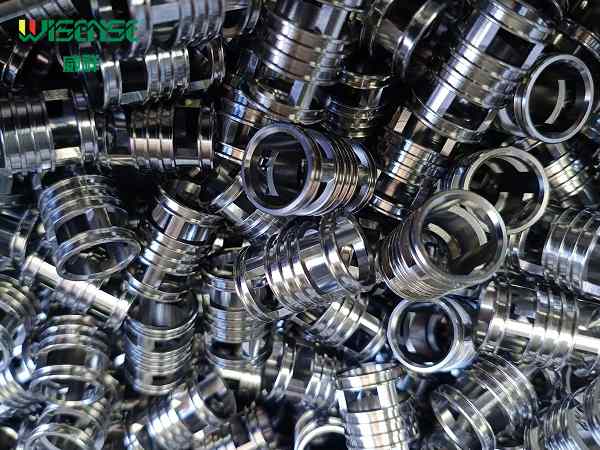
Wisense specializes in delivering top-tier CNC stainless steel machining services for years, catering to precise, high-quality manufacturing needs. With extensive expertise and advanced machinery, Wisense handles even the most complicated stainless steel projects with ease. Whether it’s custom designs or high-volume production(Wisense has two branch factories to provide mass production service), these services are tailored to meet industry standards while maintaining exceptional attention to detail.
- 247 CNC machines
- 0.005-0.02mm precision
Stainless Steel Turning Service
Wisense offers precision-focused turning services for stainless steel, ideal for producing cylindrical parts like shafts, bushings, and spindles. Using advanced CNC lathes, the team ensures consistent quality, tight tolerances, and smooth finishes, no matter the complexity of your design.
Turning services are optimized for both prototype and mass-production parts. Wisense uses high-performance inserts and cutting tools to handle stainless steel’s hardness and prevent work hardening, ensuring durability and dimensional accuracy. Whether you’re in aerospace, automotive, or food processing, stainless steel turning delivers results you can rely on.
Key highlights include:
- High precision: Achieving tolerances within microns for even the most intricate designs.
- Material expertise: Mastery in working with a range of stainless steel grades, such as 303,304, 316, and 440C.
- Perfect finishes: Achieved through cutting-edge techniques and rigorous quality checks.
If your project requires cylindrical components or intricate geometries, Wisense’s stainless steel turning service is ready to exceed your expectations.
Stainless Steel Milling Service
Wisense’s CNC milling service is designed for versatility, bringing stainless steel designs to life with unmatched precision. Milling is ideal for creating complex shapes, flat surfaces, and detailed features like holes, slots, and pockets. Using state-of-the-art vertical and horizontal milling machines, Wisense ensures every cut is exact.
Stainless steel’s strength presents unique challenges, but the team at Wisense uses optimized cutting strategies and coolant systems to keep tools sharp and surfaces flawless. Engineers fine-tune speeds, feeds, and toolpaths to deliver efficient, accurate results.
What sets this service apart:
- Complex geometry capability: Perfect for parts requiring intricate contours or 3D shapes.
- Scalable production: From one-off prototypes to large production runs, every part meets strict quality controls.
- Advanced tooling: High-speed tools and coatings ensure reliable performance even with tough stainless steel grades.
If your design involves milled flat surfaces or features, Wisense’s stainless steel milling services provide the precision and attention to detail your project demands.
Stainless Steel Swiss Machining Service
For high-precision, small-diameter parts, Wisense’s stainless steel Swiss machining service is unbeatable. Swiss machining uses specialized CNC machines where the workpiece rotates while tools make precise cuts. This method is particularly effective for producing intricate and delicate parts used in industries like medical, electronics, and aerospace.
Wisense combines Swiss machining expertise with tooling designed for stainless steel, resulting in parts that meet even the tightest tolerances. The ability to execute multiple machining operations in a single setup also boosts efficiency and consistency.
Why choose Swiss machining?
- Exceptional accuracy: Perfect for components with tight tolerances and fine details.
- Large-scale production capability: Best suited for slender parts like pins, connectors, and micro-components.
- Smooth finishes: Eliminating the need for extensive post-processing.
If your project involves small, highly detailed parts, Swiss machining for stainless steel is a powerful and efficient solution.
Stainless Steel Turning/Milling Service
For parts requiring both rotational and prismatic features, Wisense’s combined turning/milling service offers a seamless manufacturing solution. By integrating both processes into a single operation, efficiency is improved while maintaining precision. Typical projects include complex components like engine parts, fittings, and medical equipment assemblies.
Wisense utilizes multi-axis CNC machines to handle turning and milling simultaneously. This reduces handling and setup time, resulting in faster turnaround without compromising quality. Each part is machined to perfection, with dimensional accuracy and excellent surface finishes guaranteed.
Advantages of turning/milling services:
- Improved efficiency: Less downtime between processes means quicker production cycles.
- Enhanced versatility: Capability to machine complex shapes with features like threads, grooves, and pockets.
- Cost savings: Eliminating the need for separate machines reduces overall project costs.
By merging the precision of turning with the versatility of milling, Wisense ensures robust, high-quality results for complex stainless steel components.
Wisense’s stainless steel machining services are engineered to provide solutions for industries that demand reliability and precision. Whether you’re looking for turned shafts, milled parts, or intricate Swiss-machined details, Wisense delivers quality craftsmanship at every turn.
Conclusion
Machining stainless steel with CNC offers unmatched durability, precision, and versatility, making it indispensable across industries like aerospace, medical, and automotive. While challenges like tool wear and heat management exist, the right tools, settings, and techniques can turn these obstacles into opportunities for producing high-quality parts.
Whether you’re tackling a small prototype or large-scale production, success lies in understanding the material’s properties and optimizing every step of the process. Share your experiences or explore CNC machining services tailored to your needs—because pushing boundaries starts with the right strategy. Ready to take your projects further? Let’s make it happen.
