
Introduction
In the precision-driven world of manufacturing, quality isn’t just a buzzword—it’s the difference between success and failure. For CNC (Computer Numerical Control) machining shops, where tolerances are measured in thousandths of an inch and customer expectations continue to rise, having a standardized quality management system has become essential rather than optional. ISO 9001 certification stands as the gold standard in this realm, offering a framework that transforms how CNC shops operate, compete, and deliver value.
The manufacturing landscape has shifted dramatically in recent years. According to recent industry data from the International Organization for Standardization, over 1.1 million ISO 9001 certificates have been issued globally, with manufacturing representing the largest sector. For CNC shops specifically, certification rates have increased by approximately 23% since 2018, reflecting a growing recognition of its importance in securing contracts and maintaining competitive advantage.
But what exactly makes ISO 9001 certification so valuable for CNC machining operations? Let’s dive into the transformative benefits that certified shops experience and why more customers are making certification a non-negotiable requirement.
The Fundamental Benefits of ISO 9001 in CNC Operations
Enhanced Quality Control and Consistency
The heart of ISO 9001 certification lies in its systematic approach to quality management. For CNC shops, this translates to remarkable consistency across production runs—something I’ve witnessed transform struggling operations into industry leaders.
ISO 9001 certified CNC shops implement standardized procedures for everything from material handling to final inspection. This standardization drastically reduces variation between parts, even when different operators or shifts are involved. According to a 2023 manufacturing quality report by Quality Magazine, certified shops report up to 67% fewer non-conforming parts compared to non-certified competitors.
The certification requires documented procedures for calibration and maintenance of CNC equipment, ensuring machines operate at optimal precision. This alone can extend equipment lifespan by 30-40% while maintaining tighter tolerances throughout a machine’s service life.
Operational Efficiency and Cost Reduction
Contrary to the misconception that ISO 9001 creates bureaucratic overhead, properly implemented quality management systems actually streamline operations. The certification process forces shops to examine their workflows and eliminate redundancies.
A study by the American Society for Quality found that ISO 9001 certified manufacturing facilities experienced an average of:
- 23% reduction in production cycle times
- 30% decrease in scrap and rework costs
- 17% improvement in on-time delivery performance
- 21% reduction in customer complaints
- 78% of tier-one automotive manufacturers require ISO 9001 certification from machining suppliers
- 91% of aerospace contractors give preference to certified shops
- 64% of medical device manufacturers consider ISO 9001 a minimum requirement
- Real-time quality data collection and analysis
- Predictive quality control through statistical process control
- Automatic generation of certificates of conformance
- Digital traceability throughout the manufacturing process
- FMEA (Failure Mode and Effects Analysis) for new part setups
- Process capability studies to validate machining methods
- Environmental monitoring in precision machining areas
- Advanced tool life management systems
These efficiency gains don’t just improve margins—they create capacity for growth without additional capital investment. One shop owner I spoke with mentioned, “We thought we needed another machine center until we got ISO certified. Turns out we were wasting nearly 30% of our capacity on inefficient processes.”
Competitive Advantage and Market Access
Perhaps the most compelling reason CNC shops pursue ISO 9001 certification is the doors it opens. Many OEMs and prime contractors in aerospace, defense, medical, and automotive industries simply won’t consider suppliers without certification.
Recent procurement data shows that:
Beyond access, certified shops often command premium pricing—approximately 5-8% higher than non-certified competitors, according to a 2022 industry pricing analysis.
Three Major Trends in ISO 9001 Certified CNC Shops
Integration of Digital Quality Management Systems
The first major trend we’re seeing is the shift from paper-based quality systems to integrated digital platforms. Modern ISO 9001 certified CNC shops are leveraging quality management software that connects directly to CNC equipment, CMMs (Coordinate Measuring Machines), and other quality instruments.
This digital transformation allows for:
The 2023 Manufacturing Technology Report indicates that 72% of newly certified CNC shops implement digital quality management systems from the outset, recognizing that digital integration maximizes the return on their certification investment.
Risk-Based Thinking and Preventive Approaches
The latest revision of ISO 9001 emphasizes risk-based thinking—a concept that high-performing CNC shops have embraced wholeheartedly. Rather than focusing solely on inspection to catch defects, certified shops are increasingly implementing preventive strategies.
This includes:
These proactive approaches have reduced quality escapes by up to 83% in top-performing shops, according to the latest Manufacturing Quality Benchmark Study.
Supply Chain Integration and Transparency
The third major trend is the extension of quality systems beyond the shop floor. ISO 9001 certified CNC shops are creating integrated quality networks with both suppliers and customers.
Material certifications, inspection results, and process data are increasingly shared through secure digital channels, creating transparency that wasn’t possible before. This integration has reduced supplier-related quality issues by approximately 47% among certified shops that have implemented these collaborative approaches.
Case Study: Wisense Manufacturing
Nothing illustrates the impact of ISO 9001 certification better than real-world examples. Wisense Machining, a mid-sized CNC shop specializing in fluid system components, serves as a perfect case study.
Before certification, Wisense Machining struggled with inconsistent quality, high scrap rates (averaging 7.2%), and difficulty securing contracts with tier-one fluid components brands. Our decision to pursue ISO 9001 certification in 2023 transformed our business in unexpected ways.


The certification process revealed inefficiencies in our setup procedures that were causing significant variation between production runs. By standardizing these processes, we reduced setup times by 43% while simultaneously improving first-pass yield rates from 91% to 98.7%.
The most significant impact came from our newfound ability to bid on restricted contracts. Within 18 months of certification, we secured three major fluid system contracts that had previously been unattainable, increasing annual revenue by 31%.
“ISO certification wasn’t just about getting a certificate on the wall,” explains Mr He, Quality Manager at Wisense Machining. “It fundamentally changed how we think about our processes and our business. The discipline it instilled made us better at everything we do.”
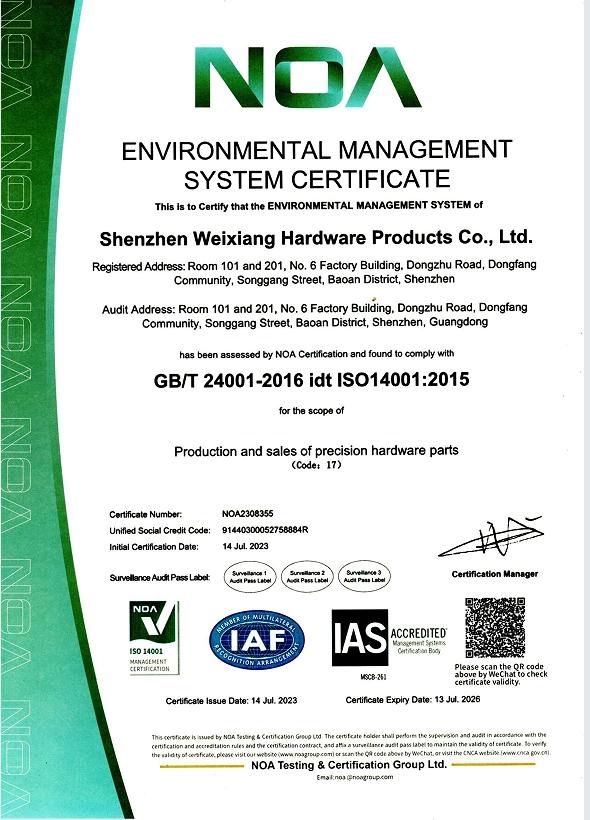
We are proud to announce that our CNC machining shop in China is ISO 9001 certified, demonstrating our commitment to providing top-quality services and products to our customers. This certification reflects our adherence to strict international standards for quality management, ensuring consistency, precision, and reliability in every project we undertake. With ISO 9001 certification, you can trust that our processes are designed to meet and exceed your expectations, delivering superior results for industries worldwide.
Best Practices for Working with ISO 9001 Certified CNC Shops
For companies sourcing machined components, understanding how to leverage the advantages of certified shops can maximize value:
1. Request process capability data rather than just focusing on price
2. Engage certified shops early in the design process to benefit from their quality planning expertise
3. Ask about their continuous improvement initiatives—certified shops should be able to demonstrate ongoing enhancements
4. Review their corrective action process—how they handle issues is often more revealing than their claim of having none
5. Consider their measurement systems analysis capabilities, especially for tight-tolerance work
Conclusion
ISO 9001 certification represents far more than compliance for CNC machining shops—it’s a transformation in how they operate, compete, and deliver value. The structured approach to quality management drives consistency, efficiency, and continuous improvement that benefits both the shop and its customers.
As manufacturing continues to evolve with increasing precision requirements and competitive pressures, ISO 9001 certified CNC shops are positioned to lead rather than follow. The investment in certification pays dividends through reduced waste, enhanced reputation, and access to premium markets that remain closed to non-certified competitors.
For shops considering certification, the message is clear: ISO 9001 isn’t just about quality—it’s about building a sustainable competitive advantage in an increasingly demanding manufacturing landscape. And for companies sourcing machined components, certified shops offer not just parts, but peace of mind.
References
1. International Organization for Standardization. (2023). ISO Survey of Management System Standard Certifications.
2. Quality Magazine. (2023). Annual Manufacturing Quality Report.
3. American Society for Quality. (2022). Economic Case for Quality: Manufacturing Sector Analysis.
4. Manufacturing Technology Report. (2023). Digital Transformation in Quality Management.
5. Manufacturing Quality Benchmark Study. (2023). Preventive Quality Approaches in Precision Manufacturing.
