
A lower material price can disappear quickly if a fitting corrodes, machines poorly, or arrives in the wrong condition. 201 stainless steel deserves consideration when its properties match the application, but it isn’t a corrosion-equivalent substitute for 304.
For buyers, the decision extends beyond the alloy name to service conditions, stock certification, and machining requirements. Start with the material’s composition, then check whether the finished component can meet your requirements.
What Is 201 Stainless Steel?
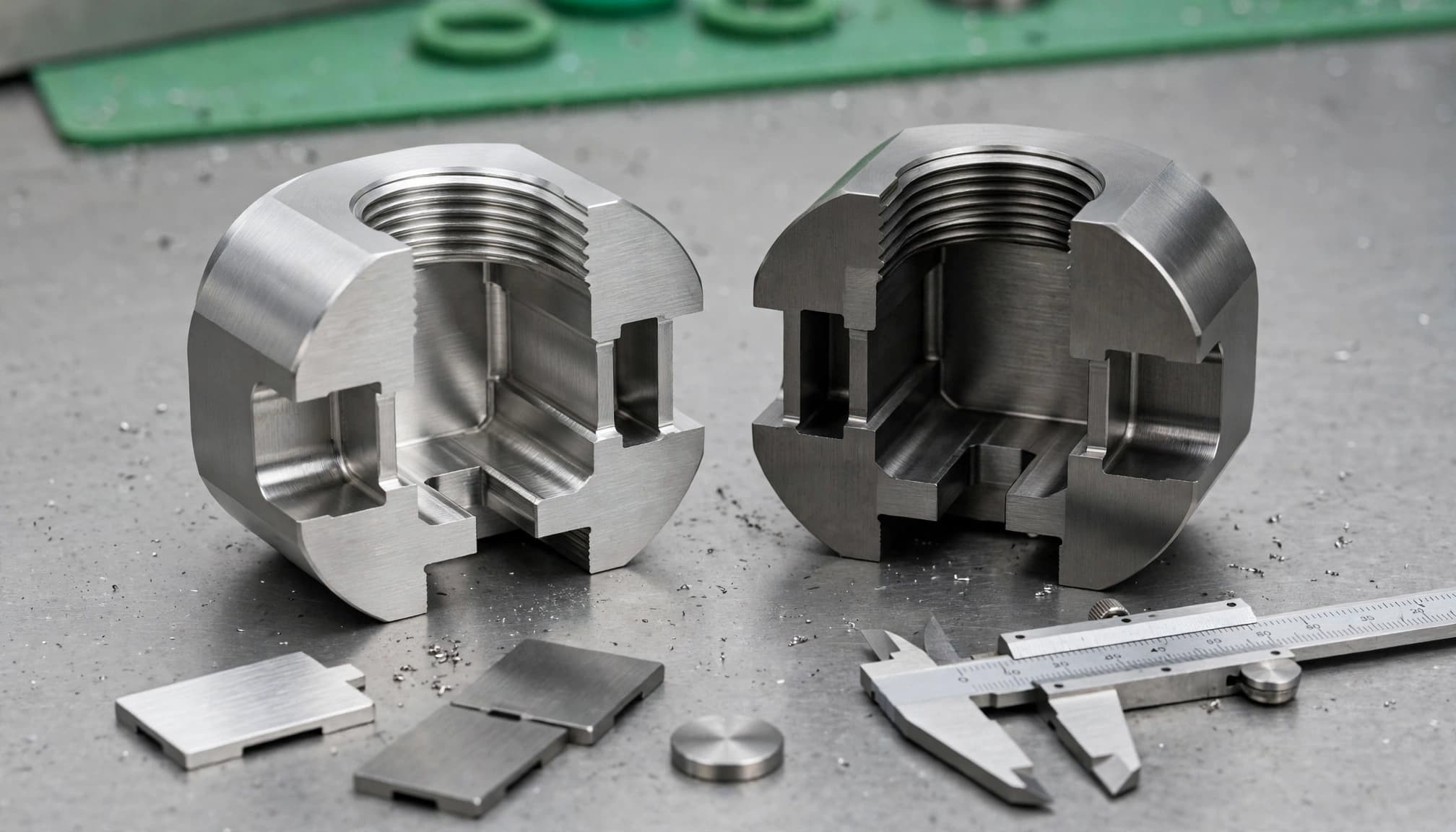
Grade identity and alloy structure
Type 201, designated UNS S20100, is an austenitic chromium-manganese-nickel stainless steel. “Austenitic” describes its internal crystal structure, which supports useful toughness and formability.
The alloy reduces nickel content compared with conventional chromium-nickel grades. Manganese and nitrogen help maintain its austenitic structure. However, this chemistry doesn’t reproduce every property of 304.
Chromium supports the thin protective surface film responsible for stainless steel’s corrosion resistance. The technical data for 201 and 201L identifies the grades separately; don’t accept one designation as an automatic substitute for another.
Composition limits need verification
Common ASTM A240 chemistry limits for Type 201 include these values by weight.
| Element | Composition limit |
|---|---|
| Chromium | 16.00% to 18.00% |
| Nickel | 3.50% to 5.50% |
| Manganese | 5.50% to 7.50% |
| Carbon | 0.15% maximum |
| Nitrogen | 0.25% maximum |
These are limits, not measured results for every batch. Request the mill certificate showing the supplied heat’s chemistry.
Published sulfur figures also differ: some references list 0.030% maximum, while Cleveland-Cliffs’ 2021 sheet lists 0.0030%. Treat the lower figure as source- or product-specific. Verify the applicable standard and ordered product rather than assuming either figure universally applies.
Mechanical Properties Depend on Stock Condition
Typical values aren’t guaranteed minimums
Strength data needs context. Cleveland-Cliffs reports typical annealed Type 201 values of approximately 110 ksi tensile strength and 52 ksi yield strength.
Tensile strength is the highest stress reached during a tensile test. Yield strength describes when permanent deformation begins. Meanwhile, elongation measures how much a test specimen stretches before breaking.
North American Stainless lists minimum values of 75 ksi tensile strength, 38 ksi yield strength, and 40% elongation for its referenced product requirements. Those figures illustrate why typical properties and specification requirements must remain separate.
Check product form, thickness, test conditions, and delivery condition before using any value in a design calculation.
Cold working changes strength and machining behavior
Cold working means deforming metal without heating it enough to remove the resulting hardening. It can increase 201’s strength and hardness while changing its machining response.
Type 201 isn’t hardened through conventional quenching like some heat-treatable steels. Therefore, an annealed material data sheet won’t describe every cold-worked bar.
For fittings, keep prototype and production stock consistent. Otherwise, a material-condition change may appear to be a tooling or process problem.
201 Stainless Steel Corrosion Resistance Has Limits
Compare the actual exposure with 304
201’s corrosion resistance is not interchangeable with 304’s, especially in chloride-containing, marine, or otherwise aggressive environments. Chlorides include salts encountered in coastal exposure, process fluids, and some cleaning solutions.
For comparison, 304’s chromium-nickel composition is commonly described as approximately 18% chromium and 8% nickel. Similar appearance doesn’t establish equivalent corrosion performance.
Document the process fluid, contaminants, cleaning chemicals, operating temperature, and exposure duration. A brief rinse followed by drying creates different conditions from warm liquid trapped inside a fitting.
No single chloride concentration can establish universal suitability. If exposure is uncertain, request an application-specific assessment or testing before approving production.
Crevices and surface condition matter
Pitting produces small localized holes, sometimes deeper than the visible damage suggests. Crevice corrosion develops in sheltered spaces, such as beneath seals or inside narrow gaps.
A connector’s exterior may stay clean while its seal groove retains contaminated fluid. Consequently, drainage and cleaning access belong in the material review.
Also keep stainless parts away from carbon-steel grinding debris. Embedded iron, machining residues, and weld heat tint can compromise expected surface performance.
Passivation can support a properly prepared stainless surface, but it cannot make an unsuitable alloy suitable or remove a fluid-trapping crevice.
Where 201 Can Make Sense
Reported Type 201 applications include washing-machine baskets, cookware bodies and lids, hose clamps, and transit-car structural members. These examples show established uses, not blanket approval for every environment.
For machined components, evaluate dry-service hardware or lightly exposed parts individually. A pneumatic fitting still needs a review of moisture, condensate, cleaning chemicals, and its internal flow path.
Where localized corrosion is a concern, other alloys may warrant consideration. The Worldstainless grade datasheets explain differences among grades, including molybdenum-bearing options. However, even 316 isn’t a universal seawater solution.
201’s reduced nickel content can offer purchasing advantages, but there’s no fixed savings percentage. Stock availability, machining time, tool wear, cleaning, and rejection rates affect the finished-part cost.
When comparing material options for fluid fittings, ask suppliers to quote against the same drawing, stock condition, and inspection requirements. Otherwise, the lowest price may reflect a different scope rather than better manufacturing economics. If you need to outsource fluid fittings CNC machining to China factories, Wisense is your good choice.
Machining 201 Stainless Steel Fittings
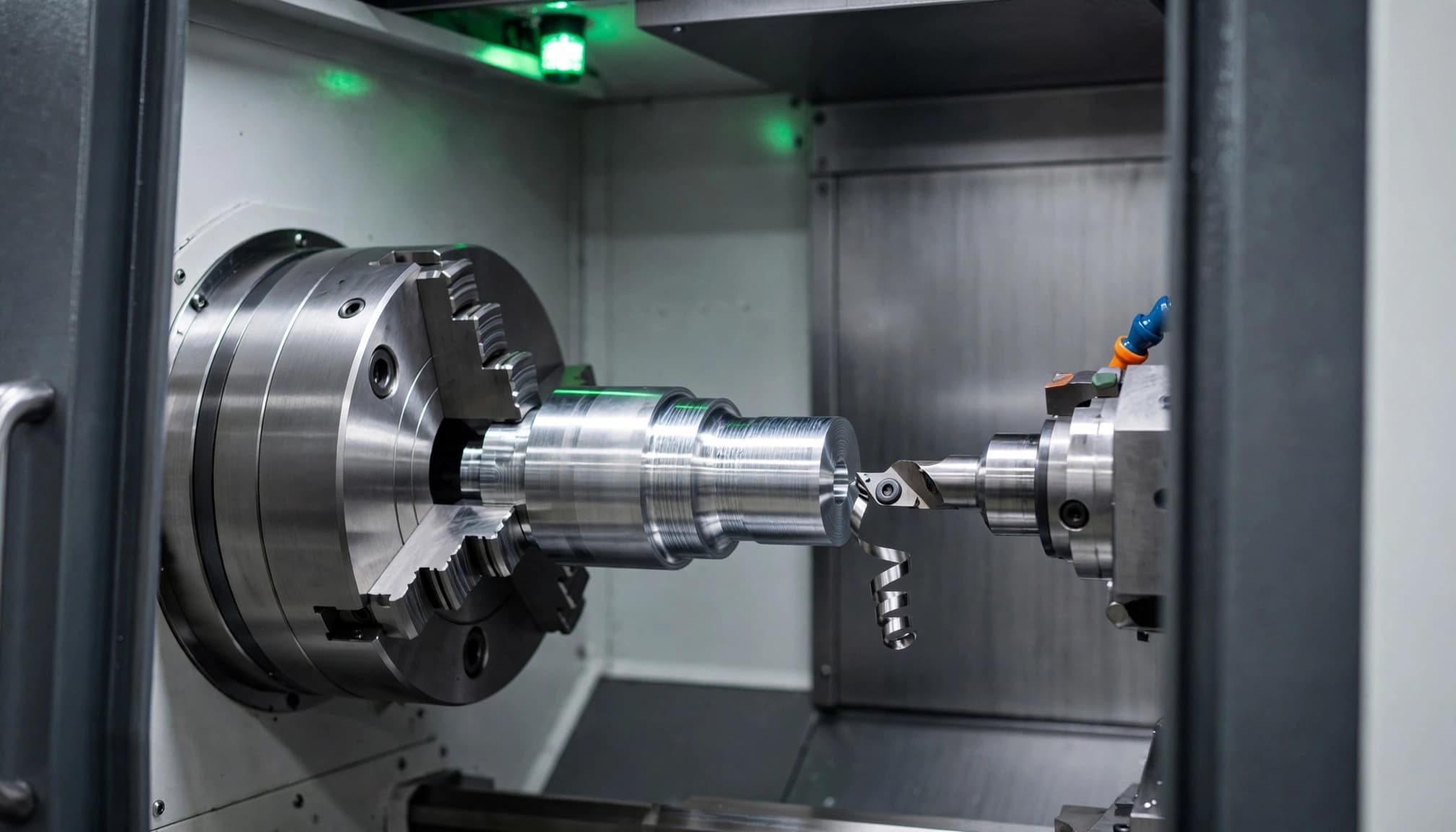
Keep the setup rigid and the tool cutting
201 can be turned, milled, and drilled, but it work-hardens readily. Work hardening occurs when deformation makes the affected metal harder.
A worn edge that rubs instead of cutting can leave a harder surface for the next pass. Avoid dwell against the workpiece and repeated light rubbing passes.
Use sharp tooling intended for stainless steel. Keep tool overhang short, support slender features, and control clamping force on thin walls. Excessive clamping can distort a fitting that changes dimensions after release.
Plan a consistent finishing cut. Wisense’s guide to CNC machining stainless steel provides additional context on tooling and cutting behavior.
Control heat, chips, and internal burrs
Direct coolant into the cutting zone. Coolant striking only the outside of a chip nest won’t provide reliable heat control or chip removal.
Start with the toolmaker’s recommendations for the specific insert and operation. Then adjust against material condition, machine rigidity, chip shape, wear, surface finish, and measured dimensions. One set of cutting parameters isn’t universal.
During drilling, check that chips leave the hole. For turning, prevent chips from wrapping around tools or scoring sealing surfaces.
Cross-holes can leave burrs inside fluid passages. Specify deburring locations and inspection methods rather than relying on a clean exterior.
Finally, validate a sustained production run. One successful sample doesn’t establish stable tool life or dimensional control across a batch.
Put the Material and Acceptance Requirements on the Order
“201 stainless” alone leaves too much open to interpretation. Identify UNS S20100, product form, delivery condition, and the applicable standard edition.
ASTM A240’s product scope covers plate, sheet, and strip. It doesn’t automatically establish requirements for bar-machined fittings. For bar or shapes, verify whether the applicable edition of ASTM A276 covers the ordered grade and condition.
A useful purchasing package should address these requirements:
- Request a mill certificate linked to the supplied heat, with chemistry and applicable mechanical test results.
- Define critical dimensions, sealing-surface requirements, thread specifications, and internal deburring acceptance.
- State required cleaning, any passivation process, and the method for checking its acceptance.
- Specify pressure or leak-test conditions when required, plus traceability and inspection expectations.
Pressure rating depends on the complete design. Wall thickness, thread roots, joining methods, and pressure cycles matter alongside material strength.
Also separate functional surfaces from cosmetic ones. Applying a tight finish requirement everywhere can increase cost without improving sealing performance.
Before repeat orders, confirm stock availability and prohibit unapproved grade substitutions. Agree on how the supplier will report material changes, tool-related drift, or nonconforming parts. These checks help preserve the conditions under which the original component was validated.
Key Takeaways
- Type 201 is a lower-nickel austenitic alloy, not a corrosion-equivalent replacement for 304.
- Property values must match the product standard and stock condition; typical data isn’t a batch guarantee.
- Reliable fittings require stable machining, clean surfaces, controlled burrs, and verification against actual service conditions.
Frequently Asked Questions
Can a magnet identify genuine 201 stainless steel?
No. Annealed austenitic stainless steels generally show little magnetic response, but cold working can change that behavior.
A magnet test can’t reliably distinguish 201 from 304 or verify specification compliance. Use traceable mill documentation and, where required, suitable material verification testing. The chosen test method must measure the elements relevant to acceptance.
Can 201 replace 304 on an existing drawing?
Only after an approved engineering review. Check corrosion exposure, strength requirements, manufacturing operations, and any governing customer or industry specification.
Even when dimensions remain unchanged, the material substitution can affect performance. Obtain the customer’s authorization before purchasing replacement stock or committing to production.
Conclusion: Specify the Finished Part, Not Only the Grade
201 stainless steel can be a practical choice when its properties match the application. Its lower nickel content doesn’t remove the need to verify corrosion exposure and stock condition.
For fittings, a clear specification connects material certification with machining, surface cleanliness, and functional inspection. Evaluate the finished-part cost against those requirements, so an attractive stock price doesn’t become a reliability problem.
