
Few metals show up in as many everyday products as 304 stainless steel. It appears in kitchen sinks, brewery tanks, restaurant counters, railings, appliance panels, and machine guards because it balances corrosion resistance, formability, appearance, and cost.
Still, grade 304 isn’t automatically right for every job. Its chemistry, finish, fabrication method, service environment, and purchase specification all affect how a finished part performs.
304 Stainless Steel: Chemical Composition and Metallurgy
Grade 304 is an austenitic stainless steel, often called “18-8” stainless because it typically contains about 18% chromium and 8% nickel. Iron makes up the balance, while carbon, manganese, silicon, phosphorus, sulfur, and nitrogen remain within controlled limits.
Typical Chemical Composition of 304 Stainless Steel
| Element | Typical Specification, % by Weight | Main Role |
|---|---|---|
| Chromium (Cr) | 18.0 to 20.0% | Forms the passive surface layer that gives 304 its corrosion resistance. |
| Nickel (Ni) | 8.0 to 10.5% | Supports the austenitic structure, toughness, ductility, and formability. |
| Carbon (C) | 0.08% maximum | Adds strength, but higher carbon can raise weld sensitization risk. |
| Manganese (Mn) | 2.00% maximum | Helps during steelmaking and supports strength and workability. |
| Silicon (Si) | 0.75% maximum | Used as a deoxidizer during production and can support oxidation resistance. |
| Phosphorus (P) | 0.045% maximum | Controlled at low levels to maintain ductility and corrosion performance. |
| Sulfur (S) | 0.030% maximum | Kept low because excess sulfur can reduce corrosion resistance and formability. |
| Nitrogen (N) | 0.10% maximum | Can add strength and help stabilize the austenitic structure. |
| Iron (Fe) | Balance | Forms the base of the alloy. |
Note: Type 304L has similar chromium and nickel content, but its carbon limit is lower, usually 0.03% maximum, which makes it better suited to many welded fabrications.
The familiar 18-8 description is useful, but it doesn’t replace a material certificate. Actual chemistry depends on the applicable standard and the mill’s heat analysis. A 304 and 304L plate reference shows the common connection between these grades and ASTM A240 plate, sheet, and strip products.
How Chromium and Nickel Shape Its Performance
Chromium forms a thin, chromium-rich oxide film when the surface contacts oxygen. This passive layer helps protect the metal from many common corrosive conditions and can reform after minor surface damage.
Nickel stabilizes the austenitic structure. As a result, 304 has good toughness, ductility, and formability. It also remains generally nonmagnetic in the annealed condition, although cold working can create some magnetic response.
Physical and Mechanical Properties of 304 Stainless Steel
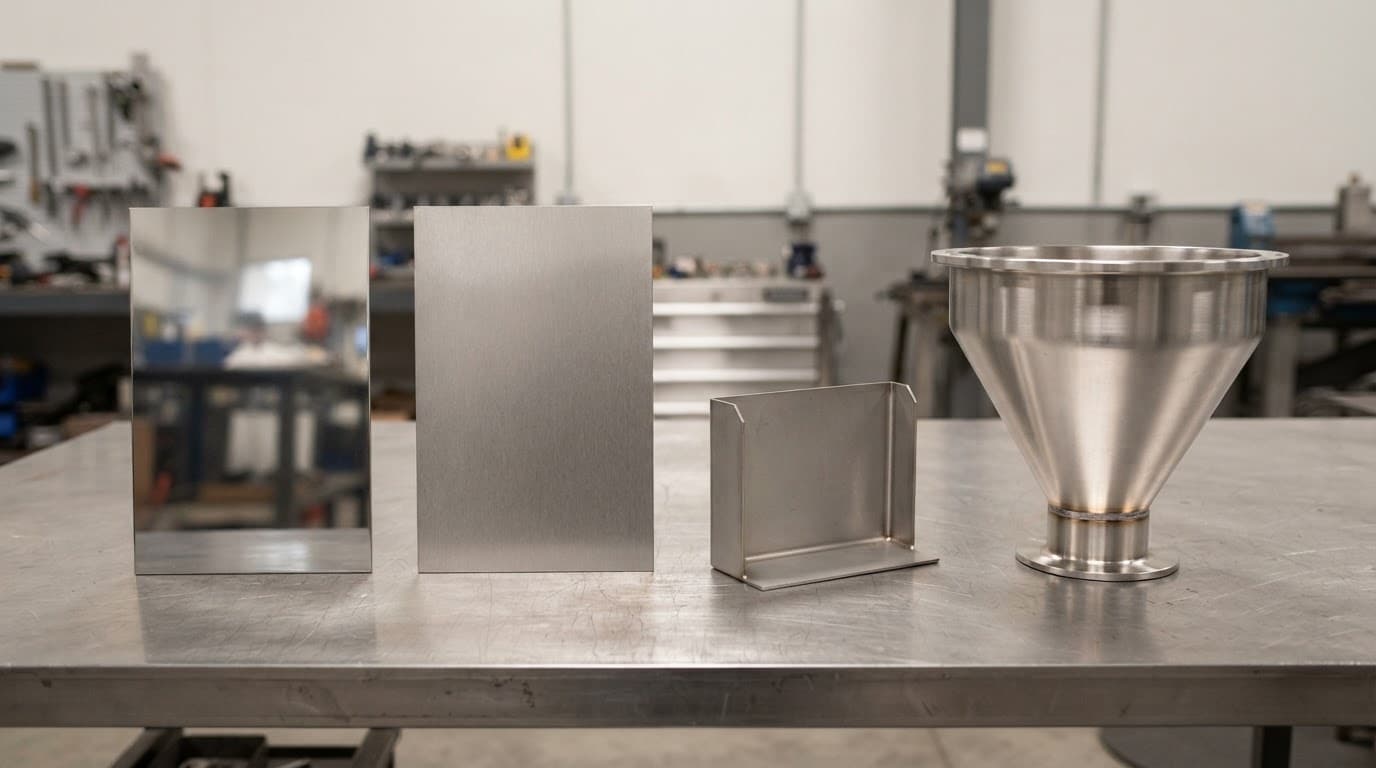
Typical 304 stainless steel has a density near 8.0 g/cm3, or about 0.289 lb/in3. Its melting range is roughly 2,550 to 2,650 degrees F. Annealed sheet often has a minimum tensile strength around 75 ksi and a minimum yield strength near 30 ksi, depending on product specifications.
These figures aren’t universal design values. Thickness, temper, product form, heat treatment, cold work, and governing standards change the numbers. A thin, cold-rolled sheet behaves differently from annealed plate or a drawn tube.
Strength, Ductility, and Temperature Limits
304 earns its broad use through a practical balance of strength and elongation. It can bend, draw, stamp, and roll into demanding shapes without the brittle behavior associated with some other metals.
Cold working raises strength and hardness, but it also makes later forming harder. High temperatures, repeated thermal cycles, heavy loads, and long-term creep exposure need an engineer’s review before material selection.
Why 304 Stainless Steel Resists Corrosion
The passive surface film makes 304 a strong choice for indoor applications, food equipment, kitchens, decorative architecture, and many mildly industrial settings. Clean, oxygen-exposed surfaces perform best.
However, corrosion resistance has limits. Salt deposits, stagnant water, aggressive chemicals, surface contamination, and poor drainage can break down the protective film.
Where Corrosion Can Still Occur
Chlorides can cause pitting, which appears as small but deep holes. Crevice corrosion can develop under gaskets, deposits, fasteners, or tight overlaps where moisture becomes trapped. Contact with carbon steel can also leave iron particles that rust on the stainless surface.
Weld heat tint needs attention because the colored oxide layer can reduce local corrosion resistance. Good welding practice, post-weld cleaning, smooth surfaces, and drainage reduce risk.
For coastal, marine, poolside, or high-salt service, 316 stainless steel often offers a safer margin because it contains molybdenum.
Fabrication and Workability: Cutting, Forming, and Welding
304 cuts well with laser cutting, waterjet cutting, shearing, punching, stamping, bending, and rolling. Its ductility makes it popular for sinks, enclosures, formed covers, and deep-drawn components.
Yet this alloy work hardens quickly. Repeated bending or aggressive forming can increase hardness in the worked area and place more demand on tools. A capable sheet metal partner matters when a part needs tight tolerances, controlled grain direction, cosmetic surfaces, or formed features. Longwang has sheet metal fabrication capability for projects that need cutting, bending, and welded stainless assemblies.
Machining and Welding Considerations
Machining 304 can be more difficult than machining free-cutting steels. Heat and work hardening can damage tool edges if the setup allows rubbing rather than cutting. Sharp tools, rigid fixturing, suitable speeds and feeds, and effective coolant help maintain a consistent finish. Wisense is experienced enough in machining 304 as well as 316 ss. If you need stainless steel CNC machining services, do not hesitate to try Wisense.
For welding, fabricators should control heat input and distortion while using appropriate filler and shielding gas. Remove heat tint afterward when corrosion performance matters. 304L is often preferred for heavily welded parts because its low carbon content reduces weld-zone sensitization. Wisense publishes practical guidance on machining and material choices that can help buyers ask more informed fabrication questions.
Surface Finishes That Change Appearance and Performance
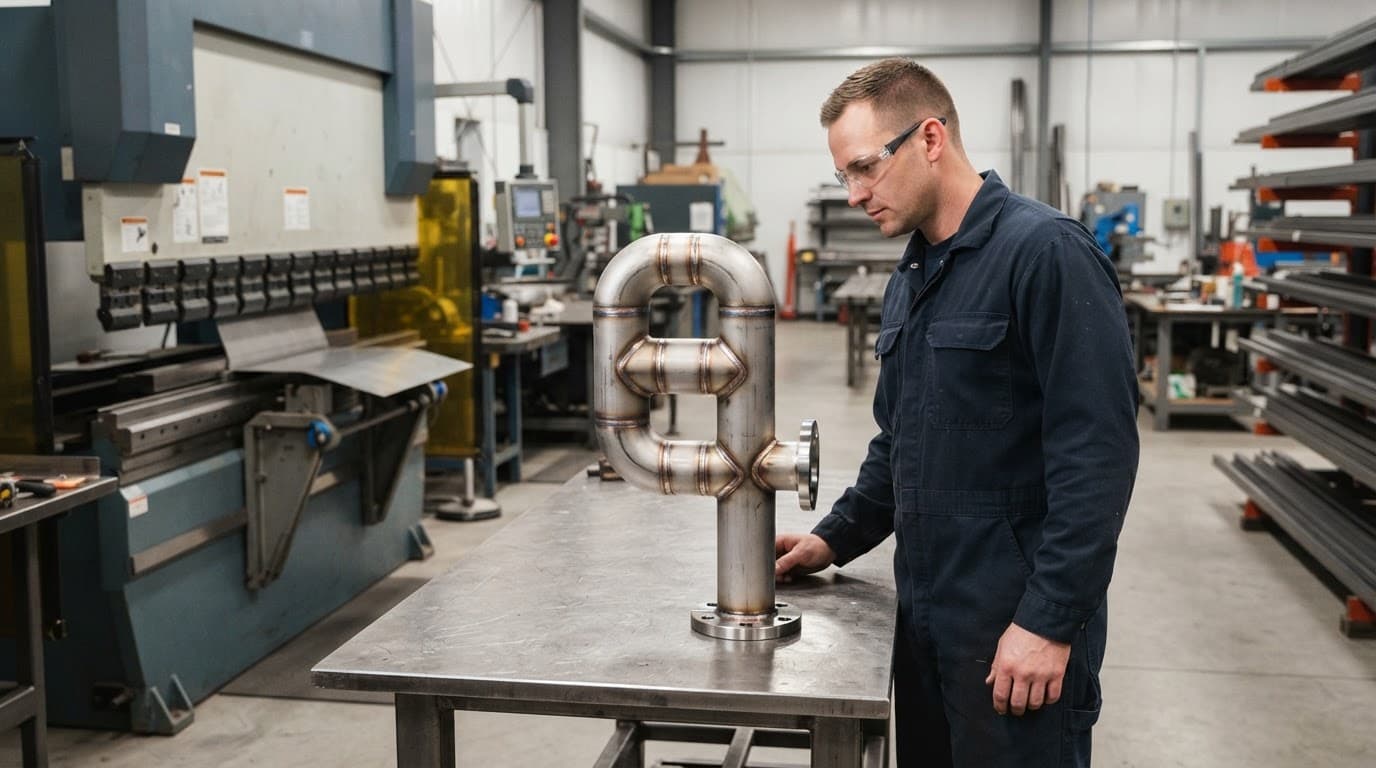
Finish affects appearance, cleanability, and fabrication behavior. Common options include mill finishes, 2B, brushed or satin finishes, No. 4 finishes, and mirror-polished surfaces.
A 2B finish is smooth and practical for many industrial uses. No. 4 provides the familiar directional grain found on appliances and commercial kitchen equipment. Mirror finishes offer high reflectivity but show fingerprints and scratches more easily.
Choosing a Finish for Hygiene or Appearance
Food-processing equipment, medical hardware, and cleanable work surfaces usually benefit from smoother finishes. Architectural panels and decorative trim may call for brushed or mirror surfaces because appearance takes priority.
Finish alone doesn’t solve a material problem. Deep scratches, embedded iron, rough welds, and heat tint can still create corrosion sites. Select the alloy first, then choose a finish that suits cleaning demands and visual expectations.
Where 304 Stainless Steel Is Used
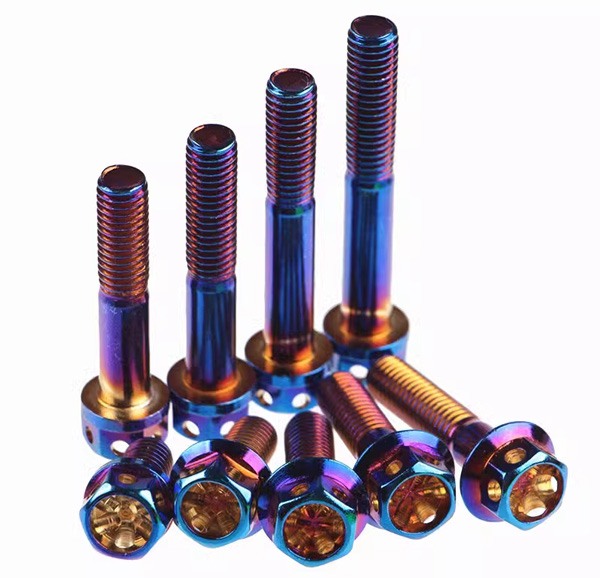
304 appears across homes, factories, and public spaces because it performs reliably in normal wet and dry conditions. Common uses include:
- Kitchen sinks, cookware, appliances, and restaurant hardware because the material cleans easily and keeps a bright appearance.
- Food-processing tanks, piping, and worktables because it resists many food-related environments and accepts sanitary finishes.
- Railings, architectural trim, fasteners, and panels because it forms well and holds up outdoors in moderate conditions.
- Automotive trim, machine covers, and general components because it offers strength without requiring paint or plating.
For saltwater, strong chemical exposure, exhaust systems, or weight-sensitive structures, another grade or material may be more suitable.
304 Stainless Steel vs. the Competition
304 is usually the general-purpose choice. Grade 316 adds molybdenum, so it better resists chloride exposure but costs more. 304L and 316L offer lower carbon levels for welded construction.
Ferritic 430 stainless steel often costs less and is magnetic, but it has different corrosion resistance and forming behavior. Grade 409 is common in automotive exhaust systems, while carbon steel is cheaper but usually needs a protective coating. Aluminum weighs less, although it has different strength, stiffness, joining, and surface requirements.
When 304 Is the Better Choice
Choose 304 for indoor equipment, food-related hardware, moderate outdoor exposure, formed sheet parts, and projects that need an appealing surface at a practical cost.
Compare 316 or a specialized alloy when the part faces marine air, deicing salts, chloride cleaners, chemical processing fluids, or persistent standing water. The lowest alloy cost can become expensive if staining or early replacement follows.
Maintenance, Cleaning, and the Truth About Stainless Steel Rust
Routine care is simple. Wash with warm water, mild soap, and a soft cloth, then rinse and dry. For brushed finishes, wipe with the grain to avoid visible marks.
Tea staining, surface rust, and discoloration usually come from salt deposits, trapped moisture, abrasive cleaners, or iron contamination. Visible rust doesn’t always mean the entire component has failed, but it does mean the source of contamination needs correction.
Cleaning Mistakes to Avoid
Avoid steel wool and carbon-steel wire brushes. They can embed iron particles that later rust. Don’t leave bleach on the surface, and avoid cleaners containing hydrochloric acid.
For stubborn contamination, use a stainless-compatible cleaner according to its instructions. Rinse away residues, dry the part, and restore a clean passive surface when necessary.
Specifications and Standards Buyers Should Check
A grade name alone doesn’t define a purchase. Buyers should request material certificates, heat numbers, product form, dimensions, tolerances, finish, temper, testing requirements, and packaging expectations.
ASTM A240 commonly covers stainless plate, sheet, and strip. ASTM A276 covers bars and shapes, while ASTM A312 addresses seamless and welded stainless pipe. A guide to ASTM stainless steel standards can help clarify why the product standard must match the item being purchased.
Procurement and Cost Considerations for 304 Stainless Steel
Nickel and chromium markets influence 304 pricing, but they aren’t the only cost drivers. Product form, thickness, width, finish, quantity, tolerances, certification, freight, lead time, and fabrication all matter.
Compare supplier quotes on the same basis:
- Confirm whether the offer is 304 or 304L and identify the required standard.
- Match dimensions, thickness tolerances, surface finish, and protective film requirements.
- Check certificates, inspection needs, packaging, freight terms, and delivery dates.
How to Select a Reliable Supplier or Fabricator
Look for traceability, inspection capability, suitable equipment, and experience with the required product form. Clear drawings should state tolerances, finish direction, weld details, cosmetic requirements, and service conditions.
A reliable supplier can identify conflicts before production begins. That early discussion often prevents mismatched finishes, unnecessary secondary work, and unsuitable material substitutions.
Environmental and Sustainability Considerations
Stainless steel lasts a long time and is highly recyclable. Its corrosion resistance can reduce repainting, replacement, and maintenance over a product’s service life.
Production still requires substantial energy and raw materials, so environmental impact varies by supplier, recycled content, transport distance, product thickness, and fabrication scrap. Efficient design, repairable assemblies, responsible sourcing, and end-of-life recycling all improve material use.
Final Thoughts
304 stainless steel remains a dependable choice because it combines corrosion resistance, toughness, formability, cleanability, and a wide range of finishes at a practical cost.
The right specification goes beyond the grade name. Match 304 to the service environment, fabrication plan, finish, standard, and maintenance needs. When chlorides, demanding chemicals, or extreme temperatures enter the picture, compare 316 and other alloys before committing to a material.
