
For valve parts, 420 generally offers a more forgiving hardness and manufacturing balance, while 440C supports higher hardness and wear resistance. The choice depends on material condition as much as the grade name.
Comparing 420 vs 440C stainless also requires a separate corrosion decision: neither is a substitute for a more corrosion-resistant alloy when the fluid demands one. Heat treatment changes cutting difficulty, finishing requirements, and dimensional stability.
Start with the component’s function, then connect the material choice to a workable machining route.
What 420 and 440C Stainless Steels Contain
Both grades are martensitic stainless steels. “Martensitic” describes an internal steel structure associated with hardening through heat treatment. Both are also magnetic.
These composition figures come from Carpenter Technology’s grade data; the applicable specification and supplier chemistry can vary.
| Composition reference | 420 | 440C |
|---|---|---|
| Carbon | 0.15% minimum | 0.95% to 1.20% |
| Chromium | 12.0% to 14.0% | 16.0% to 18.0% |
| Main distinction | Hardenable chromium steel | High-carbon chromium steel |
The carbon difference strongly affects achievable hardness and wear resistance.
420: A hardenable grade with variable carbon content
Type 420 contains enough chromium to provide stainless behavior in suitable environments. Chromium helps form the thin protective surface film responsible for corrosion resistance.
However, its minimum carbon figure doesn’t describe one fixed recipe. Different specifications and commercial variants can produce different hardening responses.
The Type 420 technical data places it within a family of hardenable chromium stainless steels. For valve components, the useful question is whether the specified condition provides sufficient hardness without unnecessary manufacturing difficulty.
440C: Higher carbon for greater wear resistance
Type 440C contains substantially more carbon. After suitable heat treatment, it develops a hard structure containing carbides, hard particles that help resist wear.
That makes it useful for wear-focused components, including bearings and selected valve internals. However, greater hardness also brings machining challenges and less tolerance for damage under demanding loading.
Higher chromium content alone doesn’t establish better performance in a particular process fluid.
Hardness Depends on Heat Treatment
A grade name doesn’t establish the hardness of incoming bar or a finished valve stem. Annealing softens the material; hardening and tempering produce a different condition.
Carpenter Technology reports these example values under its stated treatment conditions.
| Reported condition | 420 | 440C |
|---|---|---|
| Full-soft annealed | About 179 HBW | About 223 HBW |
| Process annealed | About 196 HBW | About 255 HBW |
| Hardened and tempered examples | About 52 HRC | Approximately 60 HRC |
These are supplier examples, not universal acceptance limits. HBW is Brinell hardness measured with a ball indenter. HRC is the Rockwell C scale, commonly used for hardened steels.
Annealed stock supports the main machining operations
Even annealed material has different hardness depending on its treatment. Full-soft annealing and process annealing aren’t interchangeable descriptions.
The reported values show why “annealed stainless” is an incomplete purchasing requirement. Incoming hardness affects cutting forces, tool wear, and the consistency of a production run.
However, hardness alone cannot predict cycle time. Geometry, tool access, machine rigidity, and the amount of material removed also influence machining difficulty.
Hardened parts require a different finishing plan
For 440C, Vincent Metals describes heat-treated hardness of 58 to 60 HRC. That range illustrates its high-hardness capability rather than guaranteeing every supplied part.
Tempering follows hardening to adjust properties and reduce brittleness. The selected treatment affects the final balance.
Consequently, a drawing needs a finished hardness requirement when hardness matters. It should also identify where testing is permitted, especially when an indentation could damage a sealing surface.
Match Wear Resistance to the Valve Component
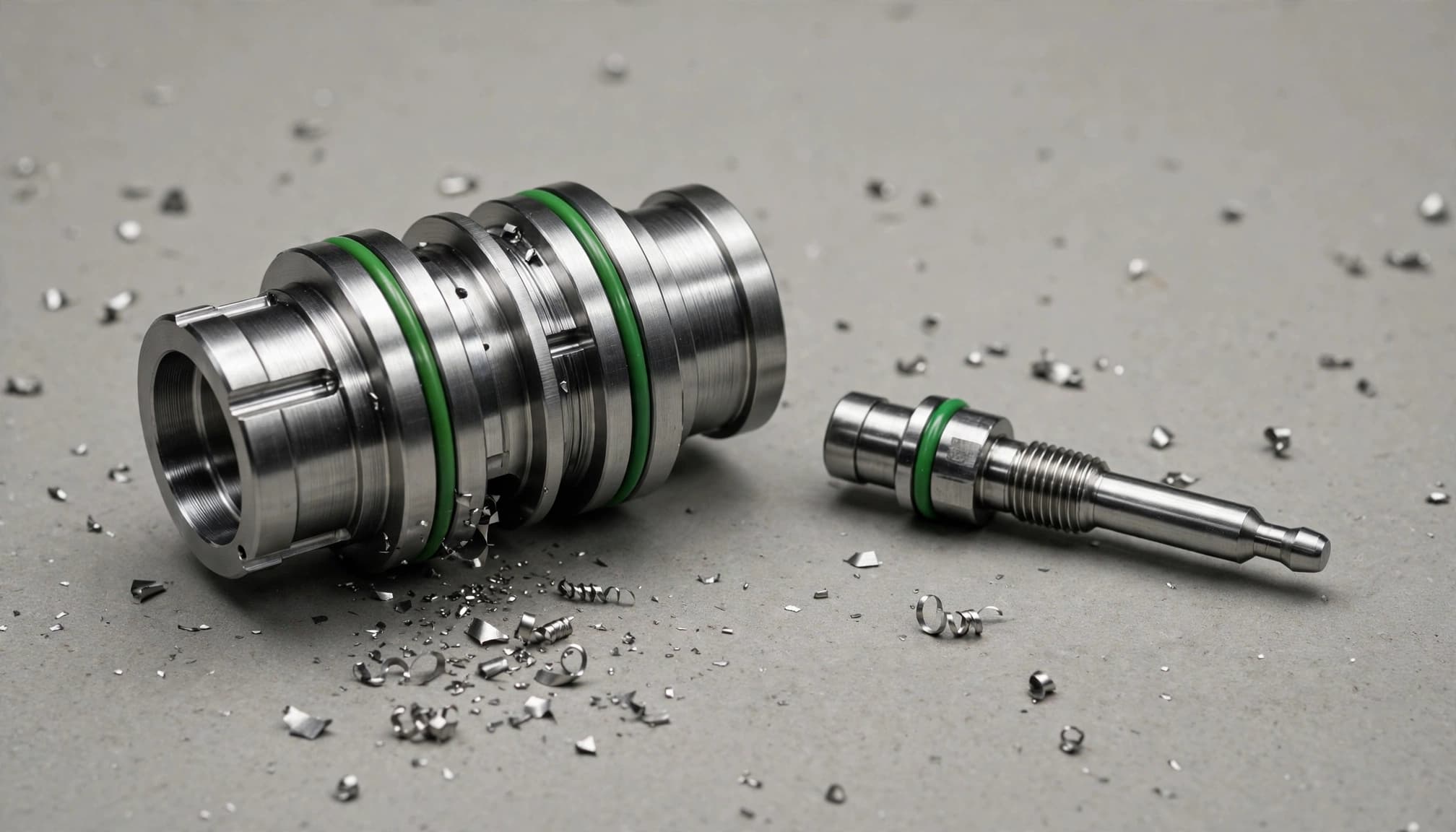
Valve assemblies contain parts with different jobs. A moving stem, contacting seat, and pressure-containing body shouldn’t automatically receive the same material.
Sliding and contacting parts can benefit from hardness
420 can be a candidate for stems, shafts, and other components requiring strength and moderate wear resistance. Its final suitability depends on the specified chemistry and treatment.
440C becomes attractive when repeated contact or abrasion creates a stronger need for wear resistance. Valve balls, seats, or other contacting internals may justify its harder condition.
However, mating materials matter too. A hard component can wear its softer counterpart, while debris can damage either contact surface.
Toughness and geometry can outweigh maximum hardness
Toughness is the ability to absorb energy without fracturing. Higher hardness doesn’t automatically improve toughness, fatigue performance, or resistance to chipping.
Thin edges, sharp transitions, and interrupted contact deserve attention when selecting a hardened grade. A wear advantage may offer little value if the geometry concentrates stress.
Similarly, neither alloy designation establishes a pressure rating. Wall thickness, thread roots, loading cycles, and the governing design requirements determine whether a fitting can safely contain pressure.
Corrosion Resistance Needs Its Own Decision
Neither 420 nor 440C should be treated as equivalent to a more corrosion-resistant stainless grade when service conditions require otherwise.
Both can resist corrosion in suitable environments, but carbon content and heat treatment affect the chromium available to protect the surface. A polished exterior doesn’t resolve incompatible chemistry inside a passage.
Evaluate the fluid and the places it collects
The service description should include the process fluid, contaminants, cleaning agents, and operating temperature. Continuous immersion differs from occasional contact followed by drying.
Seal grooves and sheltered thread roots can retain fluid after exposed surfaces drain. Those locations can experience localized attack even when the outside looks sound.
Our 316 stainless steel guide discusses another commonly used fluid-component material. Its molybdenum addition helps in many corrosive environments, although 316 also has service limits.
Preserve the surface after manufacturing
Keep finished stainless components away from carbon-steel grinding dust and embedded iron particles. Remove machining residues and address heat-treatment scale according to the engineering requirements.
If passivation is required, specify the process and acceptance criteria. Passivation is a surface cleaning and chemical treatment step that helps establish a clean protective surface.
It cannot correct an unsuitable alloy choice or eliminate a fluid-trapping crevice.
Plan Machining Around the Supplied Condition
A practical manufacturing route separates bulk material removal from operations on the final hardened condition.
The Alloy 440C datasheet describes machining in the annealed condition. That distinction matters because machining hardened 440C is a different task.
Remove most material before hardening
Where the design permits, machine the main shape from annealed stock. Turning produces concentric bores, stems, and threads; milling adds flats, slots, and side ports.
Leave planned finishing allowance on features that may move during heat treatment. Heat treatment can change straightness, roundness, and dimensions, so completing every feature beforehand can create rework.
Our stainless steel machining guide provides further context on combining turning and milling for these geometries.
Finish critical features after treatment
Grinding, suitable hard turning, or another controlled finishing operation may be necessary after hardening. The choice depends on hardness, geometry, surface requirements, and available equipment.
For hardened 440C, conventional tooling intended for annealed stock may give unacceptable wear or finish. The tool selection must match the actual condition.
Also, include the cost of heat treatment, finishing, and post-treatment inspection in the comparison. Lower machining cost before hardening doesn’t necessarily mean a lower finished-part cost.
Stable Cutting Protects Stainless Steel Fittings
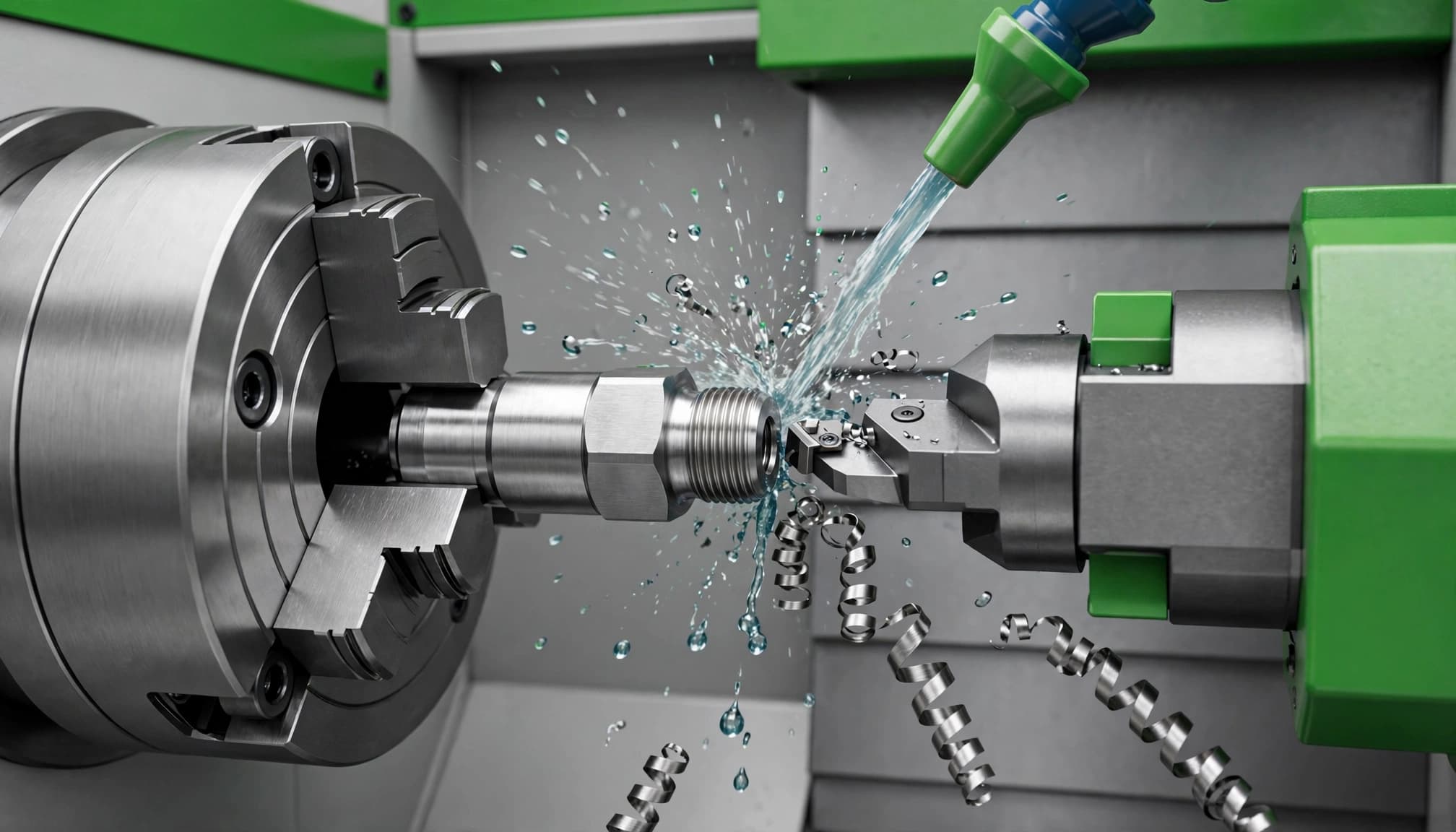
There is no universal speed-and-feed recipe for this comparison. Cutting conditions depend on material condition, tool geometry, coolant delivery, and setup stiffness.
Match tooling and support to the operation
Begin with tooling guidance for the operation and incoming hardness. Then adjust while monitoring tool wear, surface finish, cutting load, and measured dimensions.
Keep tool overhang short and support slender features close to the cut. Cutting forces can deflect a stem, while excessive clamping can distort a thin-walled fitting.
Measure distortion-sensitive features after releasing the part. Also, use a planned finishing cut rather than repeated passes that rub without removing material consistently.
Hardening through heat treatment and local work hardening from deformation are different processes. Avoid confusing them when diagnosing cutting problems.
Control chips, coolant, and internal burrs
Carpenter describes annealed 440C as producing tough, stringy chips and recommends chip-control features. A chipbreaker is tool geometry that encourages chips to curl or break.
Direct coolant into the cutting zone. Chips wrapped around a tool can block delivery, retain heat, and scratch an already-finished seal land.
During drilling, monitor chip evacuation rather than waiting for a packed hole or damaged tool. Afterward, remove burrs at intersecting passages and eliminate loose chips.
A passing thread gauge establishes thread conformity; it doesn’t prove that an internal flow passage is free of burrs.
Stop and correct uncontrolled chips before they damage functional surfaces. Never reach into a running machine to remove them.
Specify the Finished Part, Not Just the Grade
A usable purchasing specification connects material, treatment, and inspection. “420 stainless” or “440C stainless” alone leaves too many production decisions unresolved.
For our valve and fitting machining services, these requirements define the manufacturing task more clearly:
- Identify the exact grade, applicable product standard, stock form, and incoming condition.
- State the final hardness range and required heat-treatment documentation.
- Define critical dimensions, datum references, and surface requirements for sealing and mating features.
- Specify internal deburring, cleanliness, surface treatment, and any leak-test acceptance conditions.
- Connect material certificates and inspection records to the required production-lot traceability.
Focus tight controls where they affect sealing, assembly, or flow. Applying one demanding finish requirement to every surface adds cost without necessarily improving function.
A prototype establishes initial feasibility, but production also introduces cumulative tool wear and consistency concerns. Inspection should cover the sustained run, including dimensions after unclamping and damage to sealing surfaces.
Cost comparisons should include finishing, deburring, inspection, and scrap risk alongside material and cutting time.
Conclusion: Choose the Required Condition
420 usually offers a practical balance when extreme wear resistance isn’t necessary. 440C provides a stronger high-hardness option when contact wear justifies the added manufacturing demands.
The sound choice connects service requirements to material condition, corrosion compatibility, and finishing. Specify those requirements together, then control the cuts, chips, and surfaces that determine how the valve part functions.
