
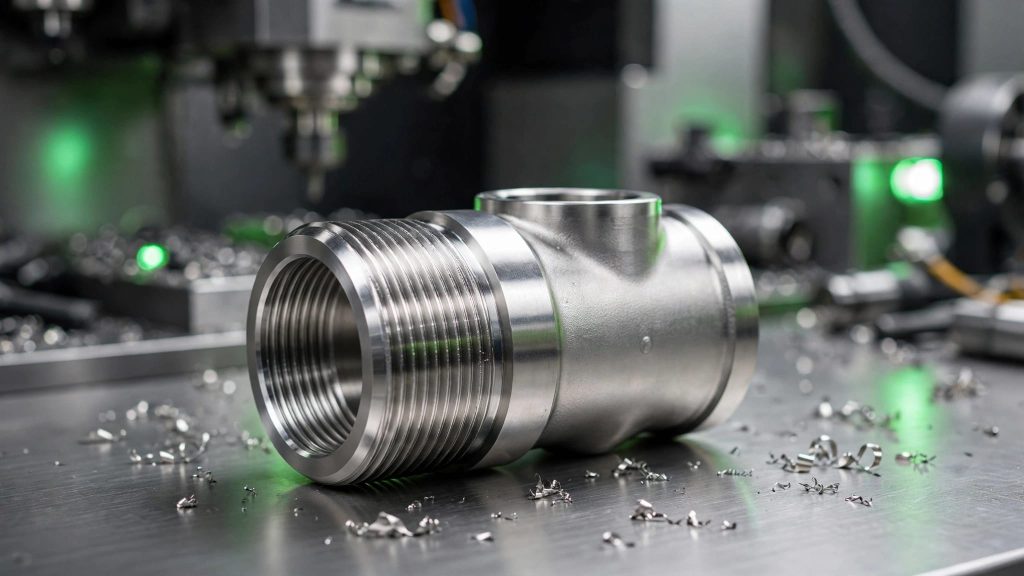
A fitting can pass every dimensional check and still corrode beneath its seal after installation. In that case, machining accuracy may not be the problem. When choosing 317L stainless steel, you also need to consider the fluid, temperature, crevices, and surface condition.
317L contains more molybdenum than the commonly used 316L grade. That can make it worth considering for parts with greater corrosion demands. But it is not an automatic upgrade for every application. First, understand what the material can offer. Then ask whether the part’s design and manufacturing process will preserve those benefits.
What Is 317L Stainless Steel?
A low-carbon austenitic stainless steel
The material designation for 317L is UNS S31703. Its main alloying elements are chromium, nickel, and molybdenum. Austenitic stainless steels generally offer good toughness and formability. In the annealed condition, they usually have little noticeable magnetic response. Cold working can create some local magnetic response, so a magnet alone cannot confirm the grade.
The “L” stands for low carbon. Compared with 317, the lower carbon content of 317L helps reduce the risk of intergranular corrosion following heating processes such as welding. Sandmeyer Steel’s 317L material information also identifies it as a low-carbon chromium-nickel-molybdenum austenitic stainless steel. Low carbon does not remove the need for a suitable welding procedure and post-weld inspection.
What does each alloying element do?
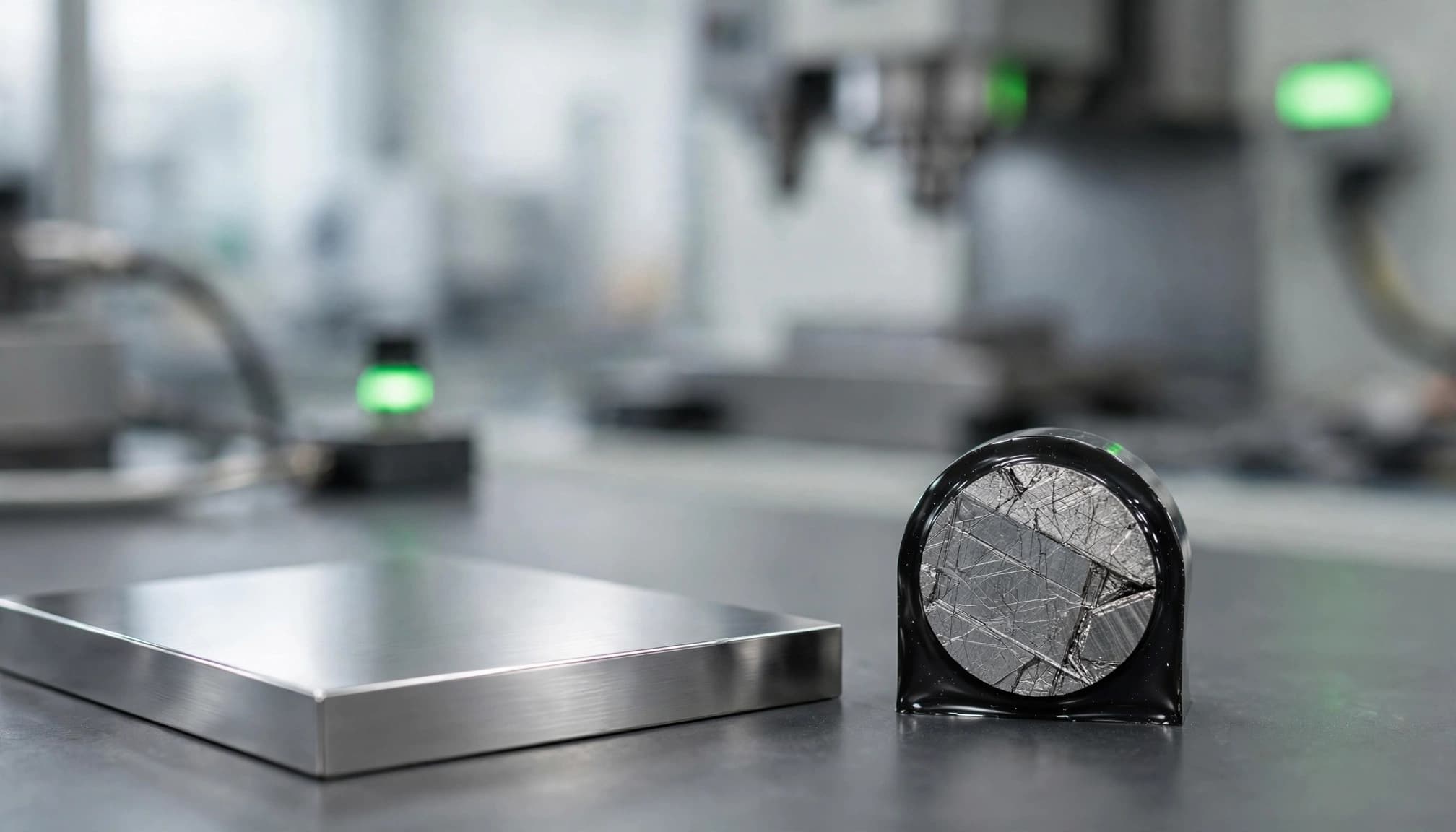
Common ASTM A240 sheet and plate references give the following composition limits for 317L. These are requirements under a product standard, not the measured composition of every batch. If you buy bar stock or another product form, check the applicable standard and material certificate.
| Element | Mass fraction | Main contribution |
|---|---|---|
| Chromium (Cr) | 18.0% to 20.0% | Helps form a protective passive film |
| Nickel (Ni) | 11.0% to 15.0% | Stabilizes the austenitic structure |
| Molybdenum (Mo) | 3.0% to 4.0% | Improves resistance to localized corrosion in various environments |
| Carbon (C) | No more than 0.03% | Reduces the tendency toward sensitization after heating |
The passive film is a very thin protective layer on the steel’s surface. Molybdenum can help that film perform in certain aggressive environments. What happens when the film is damaged, however, also depends on the fluid and the part’s design.
How to Read Property Data: Strength, Ductility, and Heat Treatment
Minimum requirements are not batch test results
Some ASTM A240 plate references list these minimum properties for annealed 317L: 205 MPa yield strength, 515 MPa tensile strength, and 40% elongation. Yield strength describes the stress at which a material begins to deform permanently. Tensile strength is the highest stress reached during a tensile test. Elongation describes how much a test specimen stretches before it breaks.
Read those figures alongside the product form, standard edition, and delivery condition. Plate requirements do not guarantee the properties of a cold-worked bar, a welded assembly, or a finished fitting. Specimen direction, thickness, and test conditions may also affect reported results. For a pressure-containing part, material strength is only one design input. Thread roots, thin walls, and pressure cycles matter too.
Annealing and cold working change how the material machines
You cannot significantly harden 317L through conventional quenching in the same way as some heat-treatable alloy steels. Solution annealing is used to adjust the structure and restore the material condition. Cold working can increase strength and hardness, but it may also make later cutting more difficult.
For that reason, specifying “317L” alone is not enough when purchasing stock. Annealed bar, cold-worked bar, and blocks cut from plate can place different demands on the tool and affect first-part setup. Where possible, use the same specification and delivery condition for prototypes and production. Keep batches traceable so you do not mistake differences in incoming material for machining process variation.
Where Does 317L Offer a Corrosion Advantage?
Molybdenum helps resist pitting and crevice corrosion
Pitting creates small, localized holes. The surface may not look badly damaged even when a pit extends deep into the material. Crevice corrosion often develops beneath gaskets, at overlapping surfaces, or inside narrow spaces that are hard to rinse. Compared with 316L, 317L’s higher molybdenum content generally helps it resist these forms of localized corrosion in some conditions.
But better pitting resistance does not mean resistance to every chloride-containing fluid. Chloride concentration, temperature, exposure time, deposits, and crevice geometry all affect the outcome. A fitting’s outer surface might be rinsed regularly while fluid remains trapped beneath its seal. The name of the process fluid alone cannot tell you whether both locations face the same risk.
Check acids against the actual service conditions
317L can provide useful corrosion resistance in certain dilute sulfuric acid, phosphoric acid, and organic acid environments. Still, changing an acid’s concentration or temperature can change its effect on the metal. Data for a single, clean fluid should not be applied without question when chlorides or cleaning chemicals are also present.
317L is not a universal answer for seawater service, either. For warm chloride-containing liquids, stagnant areas, or crevices that cannot be cleaned, document the actual fluid composition, temperature, and cleaning cycle. A focused engineering assessment or test may be necessary. Material data describes potential performance; service performance depends on the full set of operating conditions.
How Do You Choose Between 317L and 316L?
Buyers often ask whether 317L is “better” than 316L. A more useful question is whether the application needs 317L’s additional margin against localized corrosion, and whether that benefit justifies its purchasing and manufacturing costs.
| Comparison | 316L | 317L |
|---|---|---|
| Molybdenum content | Lower than 317L | Typically 3.0% to 4.0% |
| Resistance to localized corrosion | Suitable for many applications with corrosion requirements | May offer an advantage in certain conditions |
| Machining and purchasing | Work hardening and chip control still need attention | Also challenging to machine; confirm stock availability |
| Basis for selection | Fluid, part design, and validation results | Fluid, part design, and validation results |
Worldstainless grade information explains how molybdenum contributes to pitting and crevice corrosion resistance. A difference in chemical composition cannot, however, be converted directly into a finished part’s service life or a universal safe chloride concentration.
If 316L has already been validated under the actual operating conditions, 317L may offer no necessary benefit. If 316L repeatedly fails at a seal groove, changing the metal while keeping a fluid-trapping design may not solve the problem. Better drainage, cleaning access, or seal design can matter as much as the grade. Do not substitute a different grade without customer approval when the drawing specifies one.
Which Parts Might Benefit From 317L?
Start with the surfaces that contact the fluid
Parts for chemical-processing equipment, piping components exposed to specific acidic fluids, and valves that need greater resistance to localized corrosion may warrant consideration of 317L. For a quick-connect fitting or valve stem, focus on the flow path, seal grooves, and thread roots, not just the easy-to-clean outer diameter.
Before selecting a grade, list the process fluid, impurities, cleaning agents, temperature, whether fluid remains trapped during shutdown, and whether the part will be welded. Distinguish continuous immersion from brief rinsing. A data sheet that says a grade “resists” a certain fluid usually cannot answer whether a fitting with a seal and dead zones will last in service.
Do not overlook strength and stock supply
Suitable corrosion resistance does not automatically make a wall thickness, thread, or fatigue life acceptable. Evaluate pressure-containing parts against the design requirements and applicable rules. Then check leakage, deformation, and critical dimensions.
Confirm that the required bar size is available reliably, too. A prototype may be easy to make while production is delayed by raw-material lead times.
When comparing quotes, consider the total cost of a finished part, not only the price of the stock. Tool life, cycle time, deburring, cleaning, inspection, and scrap risk all affect cost.
Is 317L Difficult to Machine?
Work hardening, tough chips, and cutting heat are the main challenges
317L can be turned, milled, and drilled, but it is generally not an easy-cutting material. If a cutting edge rubs the surface instead of cutting consistently, that surface can work harden. The next pass may then be more difficult. Continuing to cut with a worn tool can also cause dimensional drift and burrs.
The material’s toughness can produce long, continuous chips. These may wrap around the tool or scratch a sealing surface. Heat concentrated at the cutting zone can accelerate tool wear. In a deep hole, poor chip evacuation may cause packing or tool breakage. Chip and heat control matter just as much as achieving the correct dimensions on the first part.
How can you build a stable cutting process?
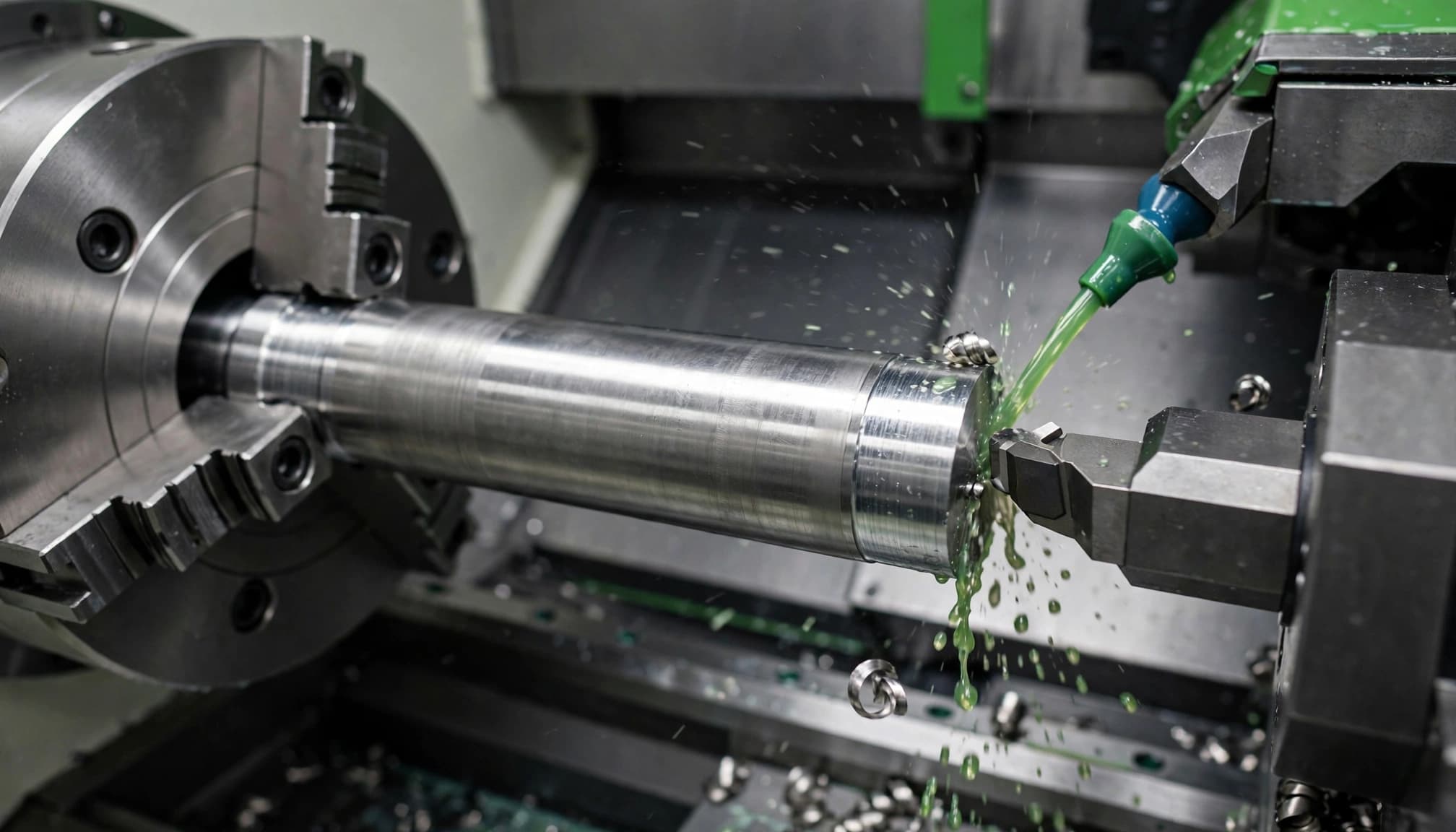
Start with a sharp cutting edge and chipbreaker geometry suited to stainless steel. Keep tool overhang short and support the workpiece adequately. Choose a feed and depth of cut that form a consistent chip. Avoid repeated light rubbing in place of a planned finishing pass. For thin-walled parts, excessive clamping force can cause dimensions to change after release.
Coolant needs to reach the cutting zone, not merely the chips wrapped around it. When drilling deep holes, assess chip removal in relation to hole diameter and depth. After machining intersecting holes, inspect the flow path for burrs and loose chips. This guide to CNC machining stainless steel provides more context on tooling and coolant choices.
Do not treat speeds and feeds from another part as universal 317L settings. Begin with the toolmaker’s guidance for the specific insert and operation. Then adjust based on machine rigidity, material condition, chip shape, tool wear, and measured dimensions. Production validation should cover a sustained run, not just one successful sample.
How Should You Specify Material and Machining Requirements?
Identify the features that affect function
For a fluid-handling part, sealing faces, mating bores, threads, and internal passages often matter more than decorative exterior surfaces. Specify critical dimensions, datums, surface requirements, and deburring locations separately. That is usually more useful than applying one very tight roughness requirement to the entire part. For intersecting holes, state whether any burr is acceptable and how it will be inspected.
Turning suits the coaxial features of fitting bodies, sleeves, and valve stems. Milling can produce wrench flats, slots, and side holes. A sliding-head lathe may be worth evaluating for long, slender parts, but machine selection still depends on geometry and volume. Custom stainless steel CNC machining services show how these processes are often combined for fluid-handling parts.
State the delivery condition and surface treatment
Purchasing documents should specify 317L or UNS S31703, the applicable product standard, product form, delivery condition, material certificate, and any batch-traceability requirement. If passivation is required, state the process and acceptance criteria. Passivation is a surface cleaning and treatment step. It cannot correct the wrong material choice or remove a poorly designed crevice.
Embedded iron particles, carbon-steel grinding dust, oil, and weld heat tint can all compromise the expected corrosion performance. Keep carbon-steel contamination away from the parts, and plan cleaning, any necessary surface treatment, and inspection around the service conditions. When evaluating a supplier, ask not only about machine capability but also how it controls damage to sealing surfaces, tool wear across a production run, and finished-part cleanliness. These tips for choosing a stainless steel machining supplier offer further checks.
Key Takeaways
- 317L is a low-carbon, chromium-nickel-molybdenum austenitic stainless steel. Its higher molybdenum content can improve resistance to localized corrosion in some conditions.
- Standard composition limits and minimum mechanical properties are not measured guarantees for every bar or finished part.
- 317L can be machined, but work hardening, long chips, and cutting heat call for sharp tools, stable workholding, and effective chip removal.
- Select the material for the actual fluid and part design. Production requirements should also cover incoming stock condition, surface cleanliness, and inspection.
Frequently Asked Questions
Is 317L always more corrosion-resistant than 316L?
317L’s higher molybdenum content can give it an advantage under certain localized corrosion conditions. “Always” is too strong. Temperature, fluid composition, welding condition, surface contamination, and crevice design can all change the result. For demanding applications, use an assessment or test based on the real service conditions.
Can ordinary CNC equipment machine 317L?
Yes. The machine’s name is not the main limitation. Rigidity, workholding, tooling, coolant delivery, and chip evacuation matter more. If a part is slender, has deep internal holes, or needs a demanding sealing surface, confirm that the equipment can hold the required dimensions and finish throughout a production run.
Does low-carbon 317L still need post-weld treatment?
Low carbon reduces the risk of certain heating-related sensitization problems, but it does not replace a proper welding procedure. Inspect the weld, heat-affected zone, and surface condition according to the service requirements. Decide whether to remove heat tint, pickle, or passivate based on the engineering specification.
Conclusion
317L is worth considering when the fluid conditions are understood and the project needs a greater margin against localized corrosion. It contains more molybdenum than 316L, but the grade alone cannot eliminate fluid-trapping crevices or guarantee that a part will not corrode.
For the dimensionally correct fitting in the opening example, reliability depends on whether the material, design, and machined surfaces all suit the operating conditions. Specify those requirements clearly, then validate them through prototypes and production inspection.
