
Type 444 stainless steel is a molybdenum-bearing ferritic grade worth considering for water components that need resistance to localized corrosion. Its low nickel content and lower thermal expansion distinguish it from familiar austenitic grades such as 304 and 316.
However, service conditions determine whether those advantages translate into a reliable fitting. Water chemistry, trapped liquid, fabrication, and surface cleanliness all influence performance.
Start with the alloy’s composition, then connect its properties to the finished component’s design and manufacturing requirements.
What Type 444 Stainless Steel Contains
Chromium and molybdenum support corrosion resistance
Type 444 carries the designation UNS S44400. Chromium creates the thin, protective surface film responsible for stainless steel’s corrosion resistance. Molybdenum improves resistance to localized attack, including pitting and crevice corrosion.
Published nominal compositions use slightly different figures. The Grade 444 technical data describes approximately 18% chromium and 2% molybdenum. Meanwhile, AZoM’s Grade 444 overview lists 18.5% chromium.
These descriptions identify the alloy family; they aren’t measured chemistry for every production batch. A material certificate records the composition of the supplied heat, meaning a traceable batch of steel.
Ferritic structure and stabilization distinguish the grade
“Ferritic” describes the steel’s internal crystal structure. Unlike austenitic 304 and 316, Type 444 doesn’t depend on substantial nickel additions to maintain its structure.
It also contains stabilizing elements. Shalco describes SS 444’s titanium and niobium stabilization. These elements bind carbon and nitrogen, helping reduce the risk of chromium depletion around grain boundaries during relevant thermal exposure.
That protection matters because chromium-depleted areas can become vulnerable to corrosion. Stabilization helps preserve the alloy’s performance, but welding practices, heat exposure, and the finished surface still matter.
Properties That Matter in Water Components
Type 444 is magnetic, which is normal for ferritic stainless steel. However, a magnet can’t establish its exact grade or demonstrate material compliance.
Compared with common austenitic stainless steels, 444 has lower thermal expansion. Consequently, temperature changes produce less dimensional movement for an otherwise comparable geometry. This can matter in heat-transfer equipment and assemblies where different materials expand at different rates.
Ferritic grades also generally conduct heat more readily than austenitic grades. Nevertheless, heat-transfer performance depends on wall thickness, deposits, flow, and the complete assembly.
Type 444 isn’t hardened through conventional quench hardening. Its mechanical properties depend on product form, processing, and material condition. Therefore, an annealed sheet property shouldn’t become an assumed value for every machined component.
Strength and corrosion resistance also answer different questions. A corrosion-resistant fitting still needs adequate wall thickness, sound thread geometry, and suitable support for its mechanical loads.
Corrosion Resistance Depends on the Water System
Pitting and crevice corrosion need separate attention
Pitting creates concentrated cavities in the metal. Crevice corrosion develops in sheltered spaces, such as beneath seals, inside tight joints, or under deposits.
The technical data describes 444’s pitting and crevice resistance as similar to CS316. However, that broad comparison doesn’t establish equivalent performance in every water system.
Chloride concentration, temperature, pH, disinfectants, oxygen availability, and exposure duration all affect the result. Warm, stagnant water beneath a seal creates different conditions from flowing water across an exposed surface.
A clean exterior doesn’t establish corrosion resistance inside a seal groove, where trapped water and deposits can create different local conditions.
Designing for drainage and limiting stagnant pockets can matter as much as selecting a molybdenum-bearing alloy.
Resistance to stress corrosion cracking has boundaries
Ferritic stainless steels generally resist chloride stress corrosion cracking better than common austenitic grades. This mechanism involves cracking caused by the combined action of tensile stress and a corrosive environment.
That advantage doesn’t eliminate pitting, crevice attack, or other corrosion mechanisms. Nor does it make 444 a universal choice for seawater, concentrated cleaners, or aggressive process water.
Evaluate the actual operating and cleaning exposure together. A suitable operating fluid doesn’t compensate for an incompatible cleaning chemical left inside the component.
How Type 444 Compares With Other Stainless Grades
Ferritic and austenitic steels differ in fabrication behavior as well as corrosion performance. The worldstainless grade datasheets provide broader context for those distinctions.
These comparisons help narrow the selection:
| Grade | Distinguishing feature | Relevance to water components |
|---|---|---|
| 304 | Common chromium-nickel austenitic grade | Useful baseline where the exposure doesn’t demand added molybdenum |
| 316/316L | Molybdenum-bearing austenitic grades | Common choices when localized corrosion resistance matters |
| 444 | Stabilized, molybdenum-bearing ferritic grade | Combines localized corrosion resistance with lower thermal expansion |
| 430 | Ferritic grade without the molybdenum addition of 444 | Doesn’t offer the same alloying approach to localized corrosion |
The practical takeaway is to compare the whole property set, rather than treating 444 as a direct replacement for 316.
Our 316 stainless steel machining guide covers the austenitic alternative in more detail. Its machining behavior, fabrication requirements, and material condition also belong in a meaningful comparison.
Where Type 444 Fits in Water Equipment
Established applications for Type 444 include hot-water tanks and heat-exchanger tubing. Its combination of corrosion resistance and thermal properties explains its relevance to water-heating equipment.
For machined components, possible candidates include connector bodies, adapters, sleeves, and selected valve parts. However, successful use in a tank or tube doesn’t automatically qualify a threaded fitting.
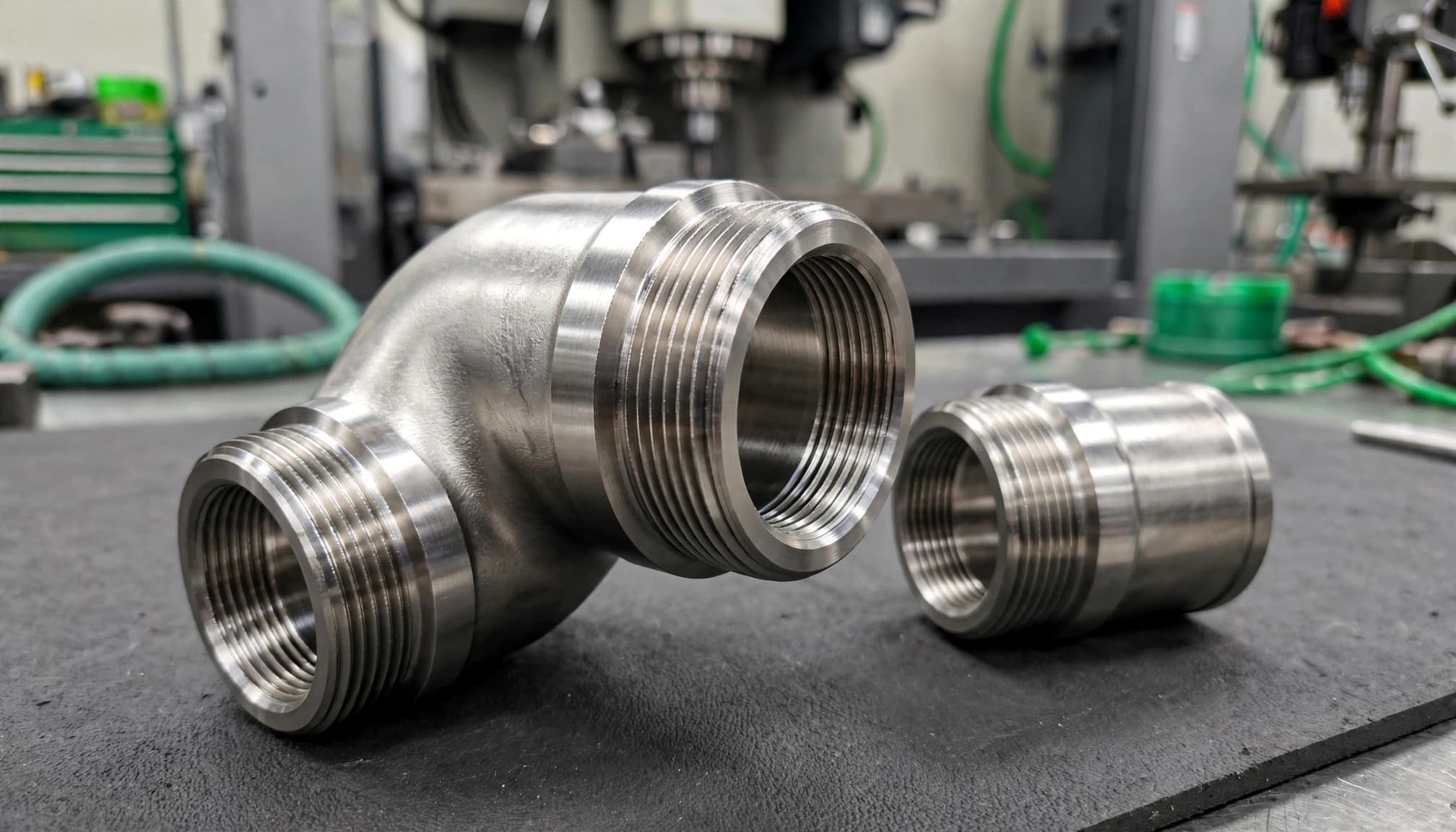
Fittings introduce seal grooves, intersecting passages, threads, and assembly stresses. Those features can change drainage, create crevices, or concentrate mechanical loads.
Potable-water suitability also involves the finished component, including seals, lubricants, treatments, and applicable drinking-water requirements. An alloy designation alone doesn’t establish approval.
For our custom CNC-machined fluid fittings, the useful starting point is a drawing tied to defined service conditions. That connects material selection with the surfaces, joints, and internal passages the component will actually contain.
Machining Type 444 Stainless Steel Fittings
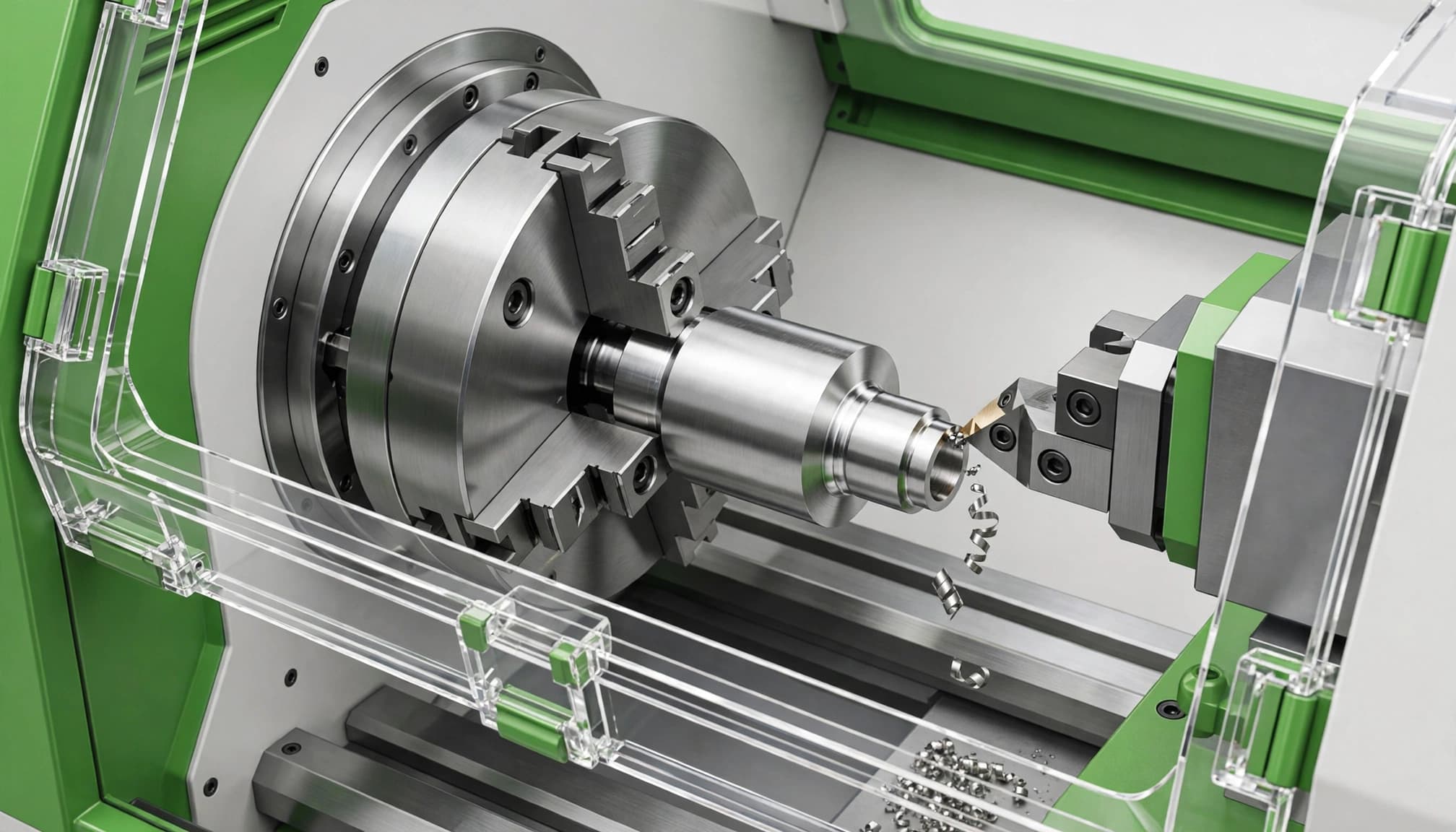
Type 444 can be turned, milled, and drilled. Its ferritic structure generally produces less work hardening than austenitic 304 or 316, but stable cutting remains important.
Keep the edge cutting and the setup rigid
Work hardening means deformation makes the affected metal harder. Even with 444’s lower tendency, dull tooling and rubbing can damage finish and make subsequent cuts less consistent.
Use sharp tooling with geometry intended for stainless steel. Choose feed and depth of cut that form a stable chip within the toolmaker’s guidance. Avoid dwelling against the workpiece or replacing a planned finishing cut with repeated shallow rubbing passes.
Keep tool overhang short and support slender features close to the cut. Also, control clamping force on thin-walled fittings. Excessive force can distort a bore that changes size after release.
Control chips, coolant, and dimensional drift
Match the chipbreaker to the operation and its feed range. Long chips can wrap around tools, obstruct coolant, or scratch sealing surfaces.
Direct coolant into the cutting zone. During drilling, maintain chip evacuation rather than allowing material to pack inside the hole.
Cutting parameters depend on stock condition, insert grade, geometry, coolant delivery, and machine rigidity. Begin with tooling-supplier recommendations, then adjust against chip shape, wear, surface finish, and measured dimensions.
Finally, assess a sustained production run. One acceptable sample doesn’t establish stable tool life or dimensional control across a batch.
Preserve the Surface and Specify Functional Requirements
Corrosion performance depends partly on what happens after cutting. Embedded iron, carbon-steel grinding debris, machining residues, and weld heat tint can compromise an otherwise suitable stainless surface.
Keep stainless components away from carbon-steel contamination. Remove chips and burrs from internal passages, especially at intersecting holes. A clean thread or polished exterior doesn’t prove that the flow path is clean.
Where passivation is required, define its process and acceptance criteria. Passivation can’t correct an unsuitable alloy or remove a fluid-trapping crevice. Heat tint may also require a separate removal process.
For purchasing and production, define the requirements that affect function:
- Identify Type 444 or UNS S44400, product form, delivery condition, and material traceability.
- Assign tolerances and surface requirements to sealing faces, mating bores, threads, and other functional features.
- State internal deburring locations, cleanliness requirements, and inspection methods.
- Include operating water chemistry, cleaning exposure, temperature, and relevant loading conditions in the design basis.
Base the design on applicable codes, product standards, and manufacturer application data. Grade-level descriptions don’t establish a finished component’s pressure rating or service approval.
Our stainless steel CNC machining services combine turning and milling for fluid-system components. Clear functional requirements help connect those operations with repeatable inspection and acceptance.
Key Takeaways
Type 444 combines a ferritic structure with chromium, molybdenum, and stabilization. Its lower thermal expansion and resistance to certain corrosion mechanisms make it relevant to water equipment.
However, neither molybdenum content nor a comparison with 316 guarantees performance. Water chemistry, component geometry, fabrication, and surface condition remain decisive.
For fittings, reliable machining means sharp tooling, rigid support, controlled chips, clean passages, and inspection of the features that govern sealing and flow.
Match Type 444 to the Finished Component
Type 444 stainless steel is a useful candidate when its corrosion behavior and physical properties match the water system. Its value depends on the complete component, including crevices, surfaces, joints, and manufacturing condition.
Define the exposure first, then connect the material specification to machining and acceptance requirements. That gives designers, buyers, and machinists a shared basis for producing a dependable water-system part.
